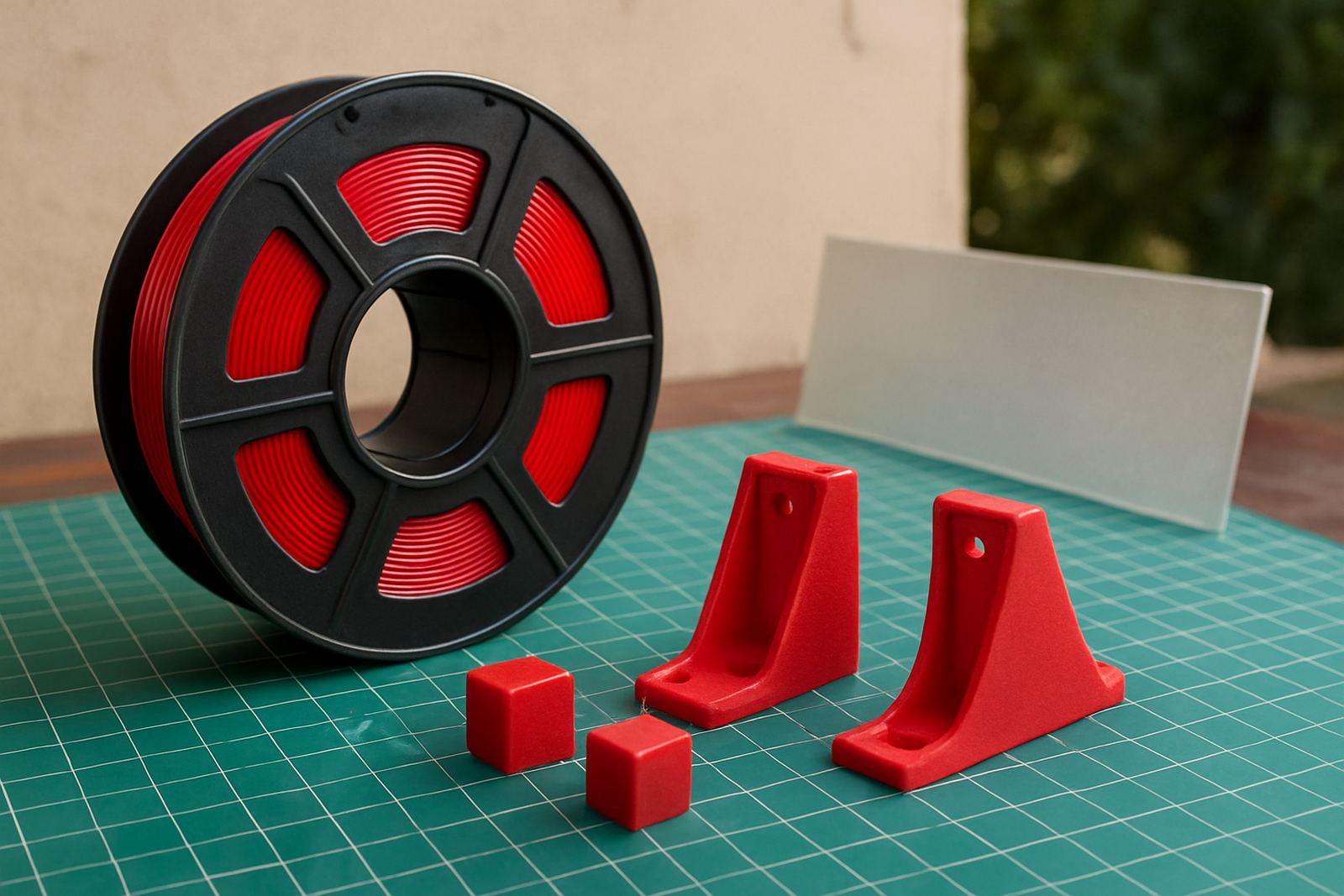
Why red PETG is chosen for working parts
PETG sits between ease of use and strength, which is why many workshops use it for functional parts rather than only display pieces. In red, the material gives good visibility on a bench, in a machine room or on site, so components are easier to identify during assembly and maintenance. That helps when you need colour coding for tooling, safety items or sample parts sent to clients.
Compared with brittle materials, PETG has better impact resistance and less chance of cracking when a part is clipped, drilled or handled often. It also copes better with warm interiors and the stop start conditions common in South African workshops during load-shedding. For prototyping, it gives a more serious finish than basic test material, yet still prints with less fuss than many high temperature options.
Sizes, spool options and print settings to plan for
Red PETG filament is commonly supplied in 1.75 mm or 2.85 mm diameters, depending on the machine in use. Spool weight is usually 1 kg, though larger reels can be arranged for repeat work. When ordering, check the exact diameter your printer accepts, because forcing the wrong size through the feeder can cause inconsistent extrusion and wasted time.
- Diameter: 1.75 mm or 2.85 mm
- Typical spool size: 1 kg
- Suitable for enclosed or open printers, depending on setup
- Best used with a dry feed path and clean nozzle
For most benchtop printers, a nozzle temperature in the 230 to 250 degree range is a common starting point, with a bed around 70 to 85 degrees. Slow the first layer if you are printing larger parts or bridging across open areas. In Cape Town and coastal towns, store the reel in a sealed bag or tub because humid air can lead to popping, stringing and dull surfaces.
Where red PETG works best in local operations
This filament suits jobs where the part must be seen quickly and used regularly. It is a good option for jigs, guides, covers, clips, brackets, demo housings and presentation models. In manufacturing spaces around Epping, Montague Gardens and Bellville, it is often used for fixtures that need to be replaced fast without changing the whole setup.
Design studios and product developers also use red PETG when they want a prototype to read clearly in client meetings. The colour helps when comparing versions, marking handholds or showing assembly direction. If you are making educational models, training aids or small production aids, red is useful because it stands out on a work surface and does not disappear into background clutter.
- Jigs and fixtures
- Demo models and presentation parts
- Light duty brackets and covers
- Colour coded shop floor aids
Installation, equipment needs and working conditions
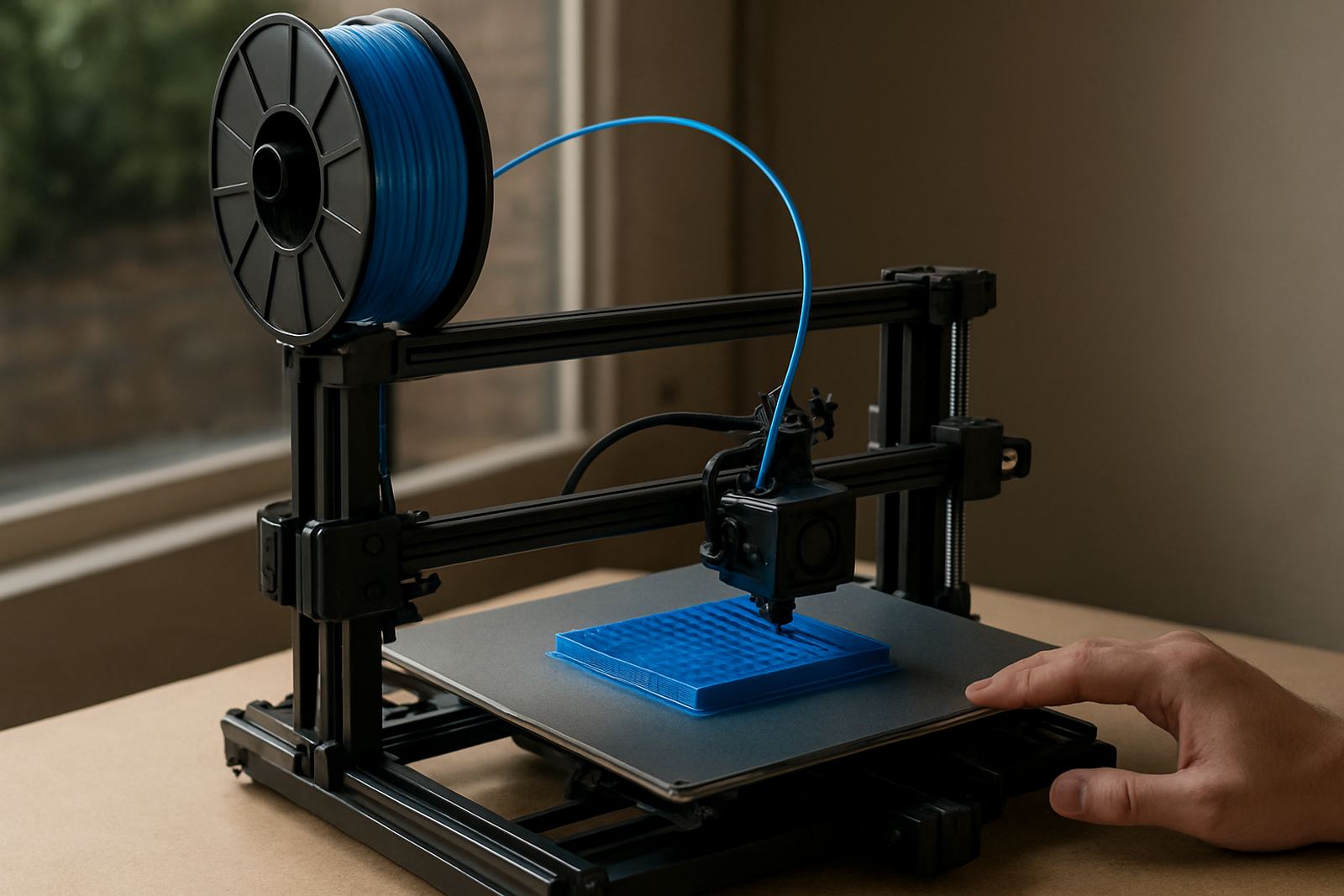
Red PETG filament does not need gas, compressed air or special curing equipment. A standard fused-filament printer is enough, provided the hot end reaches the right temperature and the bed surface is clean. For larger parts, a printer with a stable frame and consistent bed levelling gives better results, especially on long jobs where a slight shift can affect fit.
If you are printing in a shop that loses power, use a machine with power recovery where possible and avoid starting oversized jobs late in the day. A stable surface matters too, because vibration from nearby cutting equipment or a busy warehouse can leave visible marks on fine layers. If the part has screw holes or locating pins, check the model before printing since PETG can be drilled after printing but it is better to get the size right first time.
Care, storage and servicing between print runs
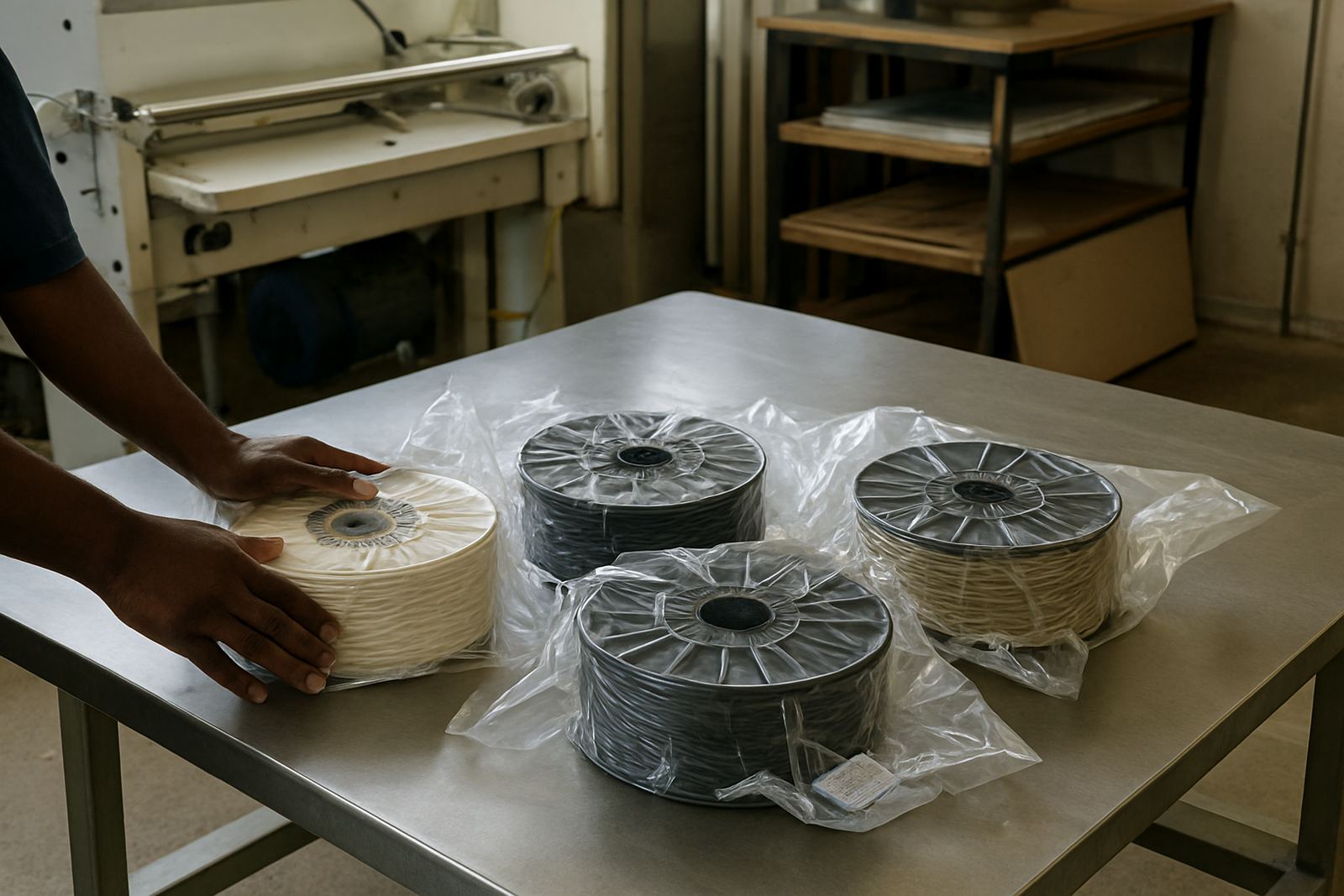
PETG is easy to keep in service if you store it properly. Keep spools away from direct sun, dusty shelves and damp floors. In coastal areas, a sealed container with desiccant helps preserve print quality. If the filament has been left out for a while, dry it before long runs to reduce bubbling and rough surfaces.
For the printer itself, wipe the nozzle area regularly and keep the feeder path free of dust. A worn nozzle can affect line consistency, so replace it when prints start showing uneven flow or rough corners. If you switch between colours often, purge the nozzle well to keep the red tone clean and avoid streaks from earlier material.
- Store sealed and dry
- Keep away from direct sunlight
- Clean nozzle and feeder path often
- Dry the spool if it has absorbed moisture
What to check before you place an order
Before you order red PETG filament, confirm the diameter, spool size and printer type. If you are matching an existing job, compare colour expectations under daylight and indoor light because red can look slightly different across finishes. Also check whether you need a glossy surface, a more muted look or a tougher finish on the visible side.
It helps to note the intended use as well. A decorative sample and a load bearing bracket may use the same material, but the wall thickness, infill and supports will differ. If you are printing batches for a client, ask for enough stock for setup waste and testing. That avoids delays once the first reel is nearly finished and the job still has to go out.
- Confirm 1.75 mm or 2.85 mm
- Check spool weight for the job size
- Match the colour to your sample or brief
- Allow extra stock for test pieces and failures
Ordering from Cape Town and getting it to site
From our Epping base in Cape Town, red PETG filament can be couriered nationwide, and sheet orders can be cut to size for local collection or delivery. Clients in Somerset West, Paarl, Stellenbosch, Claremont and surrounding areas often order for quick turnaround, while teams further afield rely on courier packing and job labelling so the right material reaches the right person. If you need more than one reel, or a repeat order for a production run, it is best to send the details through the enquiry form with the quantity, diameter and intended use.
That lets us advise on the correct option for your printer and workload. If your setup is sensitive to moisture, heat or long unattended runs, mention it upfront so we can help you choose what fits the job and the local conditions.
Key facts
| Material | PETG |
|---|---|
| Colour | Red |
| Filament Diameter | 1.75 mm or 2.85 mm |
| Typical Spool Size | 1 kg |
| Printing Temperature | 230 to 250 degrees C |
| Bed Temperature | 70 to 85 degrees C |