What PETG strip cuts are used for
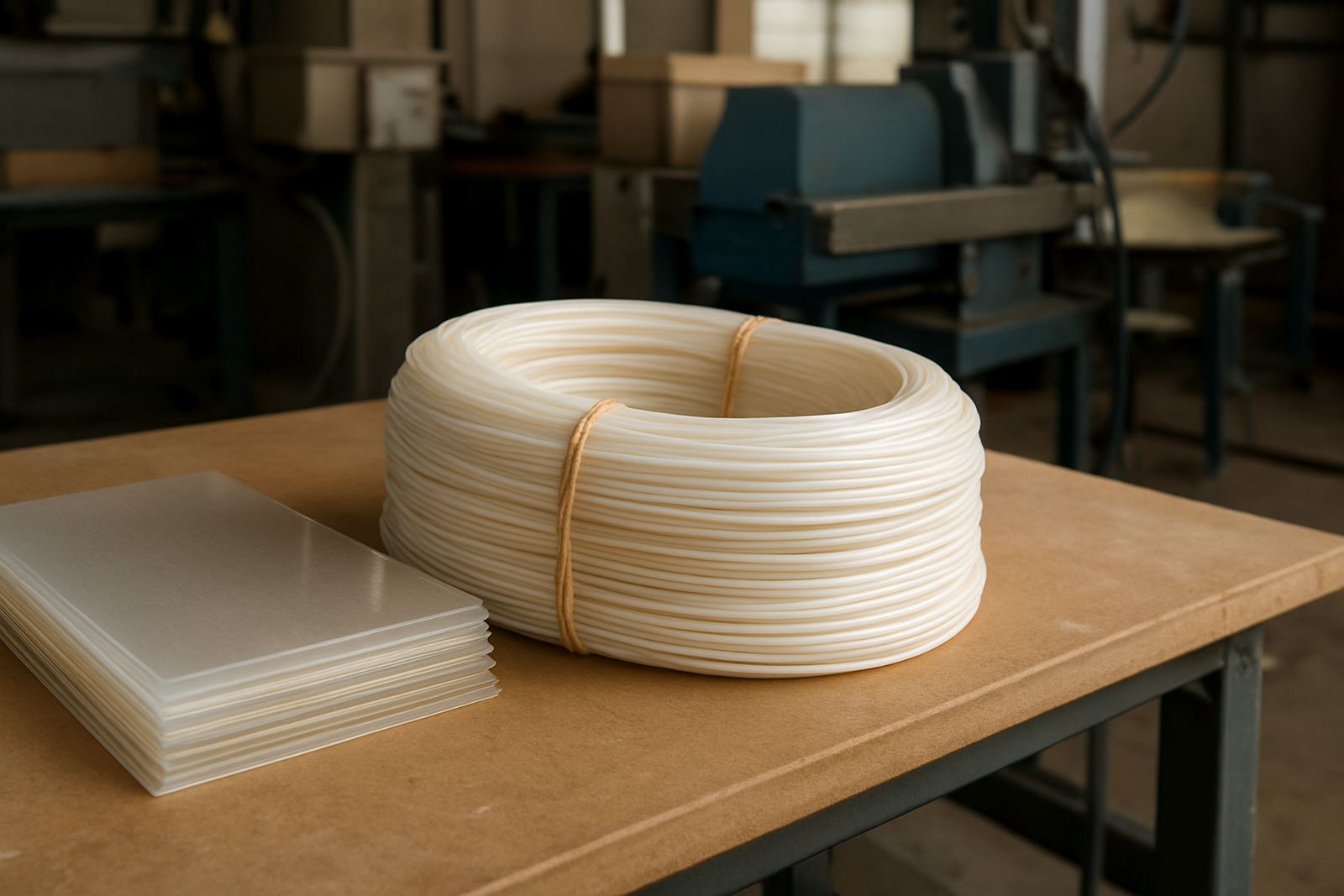
Strip cuts are long, narrow sections cut from PETG sheet to suit a specific width and length. They are used where a clean straight edge matters, especially in fabrication jobs that need repeatable spacing or a neat finishing strip. In workshops around Cape Town and beyond, they are commonly used for edging, internal spacers, light-duty rails, display details, machine guards, protective trims and jig parts.
PETG is a practical material when you need more impact resistance than acrylic and easier forming than many harder plastics. It handles everyday handling well, and it is a good choice for parts that may see moisture, cleaning chemicals or frequent touch points. For coastal sites, that matters. The material does not rust, and it suits indoor and sheltered outdoor use where metal would need extra maintenance.
If you are working on a fit-out, prototype or production run, strip cuts help reduce waste because you order only the width you need. That also keeps the job neater on site, with less trimming required after delivery.
Sizes, thicknesses and cut tolerances
Strip cuts are prepared from PETG sheet in a range of thicknesses and widths, depending on the job. Typical sheet thicknesses used for strip cutting include 1 mm, 2 mm, 3 mm, 4 mm, 5 mm and 6 mm, with wider or thicker material available on request for certain applications. We can cut narrow strips for detail work, or wider bands for framing, edging and partition components.
When ordering, it helps to work from the finished size you need on the bench or in assembly. If you are allowing for a channel, rebate or overlap, give the exact finished width and the quantity per length. For batch work, the repeatability is important, so the same width should be specified for every strip in the run.
- Widths can be set to your required size from narrow detail strips to wider panel edge pieces.
- Lengths can be supplied as single pieces or repeated batch cuts, depending on the job.
- Edges may be left as cut or finished with deburring where a cleaner hand feel is needed.
- Film can be left on for protection during handling and installation.
Where PETG strips suit best
PETG strip cuts are useful across manufacturing, signage support, cabinet work, display fabrication and prototyping. In Epping workshops they are often ordered for repeat fabrication details where a sheet is too broad and a ready-made profile is not the right fit. They also suit small production runs where you need a predictable part without paying for a moulded component.
For outdoor-facing jobs, PETG is best used where the strip is protected from direct long-term weathering or heavy abrasion. In humid coastal conditions such as Cape Town, Somerset West and the wider peninsula, it remains a sensible choice for many indoor and semi-exposed applications. It is also suitable for sites dealing with load-shedding because it does not need power to perform once installed, though fabrication and fixing tools may need planning around outage times.
Common use cases include:
- Edge strips for panels and fabricated covers
- Spacer strips for assembly, mounting or alignment
- Guide rails and light support pieces
- Display lips, retainers and trim sections
- Prototype parts for testing fit before full production
Installation details and fixing methods
PETG strips can be fitted using screws, rivets, clips, adhesives or mechanical trapping, depending on the job. If the strip will be fastened through, hole marking can be requested so the fixing points are consistent before delivery. For cleaner installations, edge deburring helps reduce sharpness after cutting. Where a protective face is needed during fitting, ask for the film to be left on until the last step.
For installers working on site, the main point is to avoid forcing the strip into a tighter slot than it was cut for. Leave enough allowance for thermal movement if the strip is fixed in a long run, especially in warmer rooms or near glazing. On municipal or tenant-controlled jobs, always check whether drilling into walls, ceilings or fire-rated panels is allowed before you start. If the strip forms part of a safety barrier or enclosure, confirm the intended use first so the fixing method matches the application.
PETG itself does not need gas or special curing during installation. Standard workshop tools are usually enough for trimming, drilling and fixing, but the job should be planned around the exact thickness and the type of surface it will sit against.
Care, cleaning and service life
PETG strip cuts are straightforward to maintain. For routine cleaning, use a soft cloth with mild soap and water. Avoid harsh solvents or abrasive pads, because they can mark the surface or leave it cloudy. If the strips are part of a visible finish, it is worth wiping dust and cutting residue off before final assembly so the surface stays neat.
In everyday use, the service life depends on thickness, fitting method and exposure. Thicker strip cuts last better in places where there is repeated contact or vibration. If the strip is used on a machine edge or in a workshop, inspect it from time to time for cracks, loose fixings or wear at the corners. In busy environments, a quick check every few months helps prevent minor damage becoming a replacement job.
We can also assist with repeat orders if you need the same strip dimension again for maintenance or batch replacement. That is useful for production lines, maintenance teams and fabricators that keep spares on hand.
What to check before you place the order
To get the right strip cut first time, measure the finished width you need and decide whether you want straight cuts only or any extra finishing. If the strip must fit into a channel or slot, include the internal measurement and any allowance required for expansion or adhesive. When a job needs several pieces, state whether each piece must be identical or whether there are mixed lengths in the batch.
It also helps to confirm the following before submitting your enquiry:
- Material thickness and exact strip width
- Total quantity and individual lengths
- Whether the film should stay on
- Whether edges should be deburred
- Whether holes or markings are needed
- Collection from Epping or courier delivery nationwide
If you are unsure about the best size, our team can help with material advice before cutting starts. That is especially useful for first-time orders, prototypes and jobs where several measurements must line up on site.
Cutting from our Epping workshop and delivery options
Strip cutting is handled from our base in Epping, Cape Town, with collection available for clients in nearby areas including Montague Gardens, Bellville, Parow, Claremont, Somerset West, Paarl and Stellenbosch. For customers farther afield, PETG strip cuts can be couriered nationwide, packed and labelled for straightforward receiving on site or at your workshop.
Our team manages straight cuts, strip cutting, small batch cutting, large batch cutting, courier packing and job labelling so the order moves cleanly from enquiry to dispatch. If you need a repeat supply for a fabrication job or a production run, we can keep the dimensions consistent from one batch to the next. That saves time when your team is working to deadline and needs the same part again without remeasuring everything.
Clients reach us through the enquiry form on the contact page, where you can send the sizes, quantity and any special handling notes. The more detail you give upfront, the easier it is to match the strip cut to the job on hand.
Key facts
| Material | PETG sheet, cut into narrow strips |
|---|---|
| Thickness range | Commonly 1 mm to 6 mm, other sizes on request |
| Cut type | Straight strip cuts for edging, spacers and fabrication details |
| Finishing options | Film left on, edge deburring, hole marking |
| Supply format | Single pieces or batch runs |
| Fulfilment | Collection in Epping or couriered nationwide |