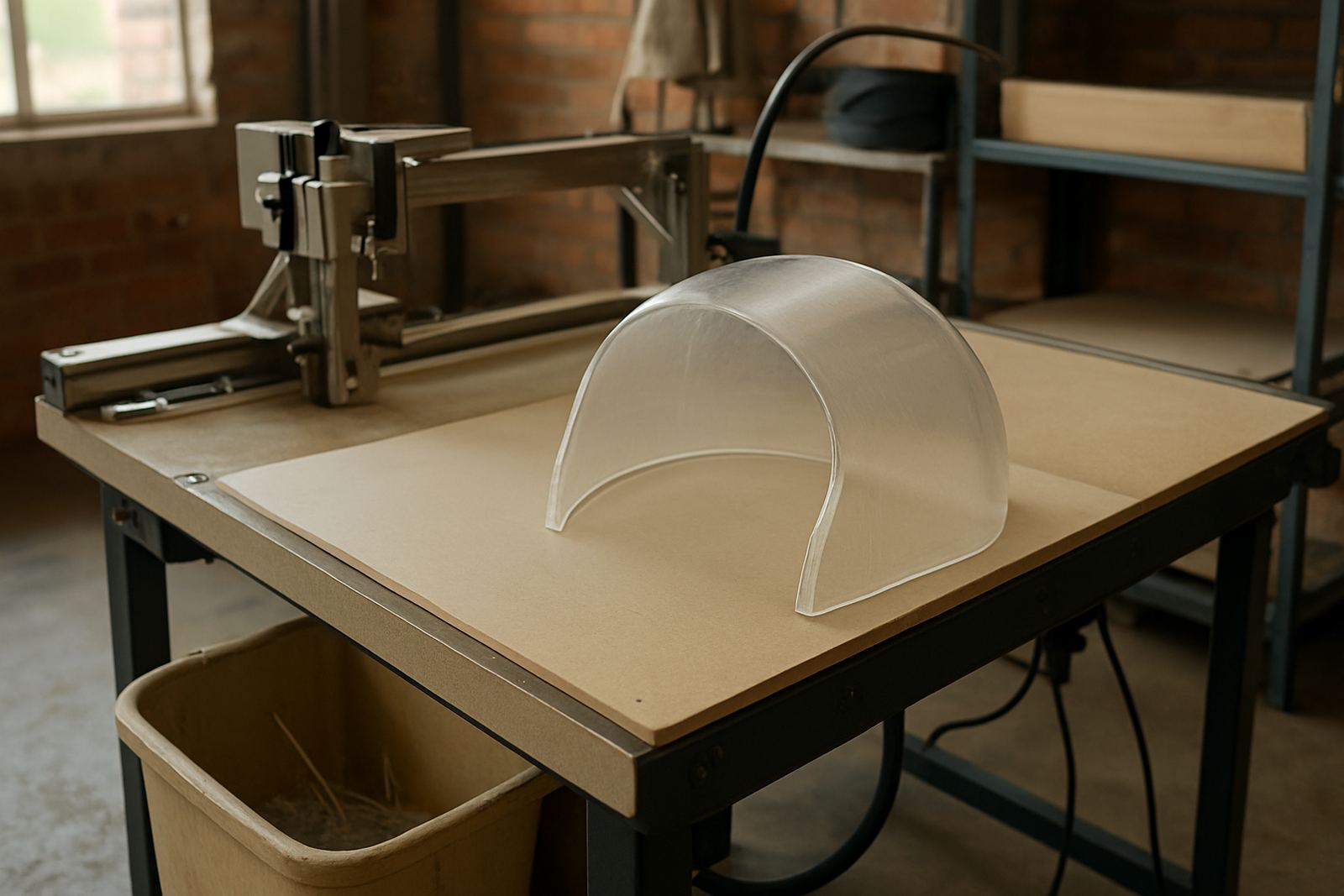
Why PETG is used for formed parts
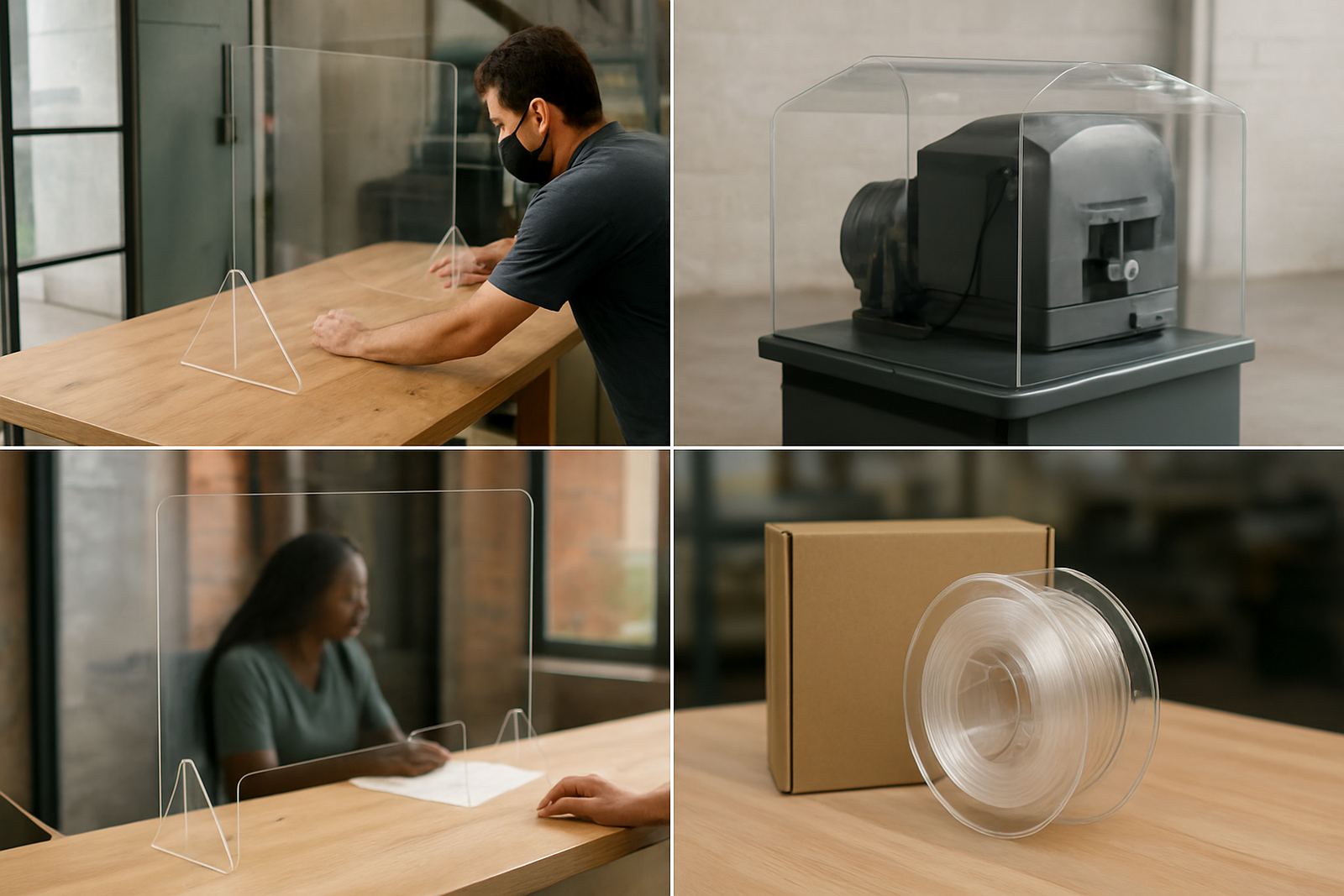
PETG is often chosen when a tray, cover or display needs to be shaped without going brittle. It forms cleanly, keeps good clarity, and gives enough impact resistance for day to day use in factories, workshops and retail spaces.
In Cape Town, we see it used for machine guards, food handling trays, point of sale covers and prototype housings. It is a sensible option where acrylic may crack during forming, or where a part needs a bit more give after forming.
- Good clarity for display work and protective covers
- Forms at lower temperatures than many rigid plastics
- Suitable for short runs and one-off prototype jobs
- Useful where a neat, clean finish matters
What to check before you start forming
Good forming starts with the sheet. Thickness must match the mould depth, the return flange size and how much the part will be handled. If a tray has deep corners or sharp pulls, a thicker sheet may be needed, but too much thickness can make heating uneven and slow down the cycle.
It also helps to decide whether the film should stay on during cutting and forming. For many jobs, keeping the protective film on during processing reduces marks, then the film comes off only at the end. That small step can save a lot of rework.
- Match thickness to the shape and finish required
- Check mould detail, corner radius and draft angle
- Confirm whether film-on or film-off is best for the job
- Allow for trimming after forming if the part needs tight dimensions
Common forming uses in South African workshops
Thermoformed PETG shows up in more places than people expect. A fabrication shop in Epping may use it for a clear machine cover, while a Stellenbosch producer may need formed inserts for packaging or a custom tray for holding parts during assembly. The key is repeatability, especially where the same shape must be made more than once.
For businesses working around load-shedding and tight schedules, pre-cut sheets make planning easier. A forming team can collect cut panels, get the heater time sorted, and keep the line moving when power windows are short. That matters when a client has a launch date or a production slot booked.
- Protective covers for tools, displays and equipment
- Trays for sorting, storage or assembly lines
- Packaging inserts and formed presentation pieces
- Prototype shells for product testing and fit checks
How thickness affects the finished part
The thickness you choose will affect not only the final strength, but also how the sheet behaves in the mould. Thin sheet will form quicker and capture detail well, yet it may sag more during heating and need careful support. Thicker sheet keeps shape better, though it takes longer to heat through and may need more trimming after forming.
For shallow covers, lighter gauges can be enough. For trays that will be moved often or stacked, a heavier sheet is usually safer. If the part sits near a heat source or in a warm room, it is worth allowing a bit of extra material stability so the item does not distort in service.
- Thin sheet suits light covers and detailed shapes
- Medium thickness works well for general trays and guards
- Thicker sheet is better for repeated handling and load bearing use
Cutting accuracy before the heat step
Thermoforming does not forgive poor prep. If the blank is cut out of square, or the batch sizes vary, the finished parts can drift out of spec. That is why straight cuts, strip cutting and panel cutting are useful before the sheet ever reaches the forming stage.
At our Epping base, many jobs are prepared for collection from Cape Town and nearby areas, while filament is couriered nationwide and sheet work is cut to size for the client. For forming work, accurate labelling and batch separation are useful when multiple sizes are going to the same workshop. It keeps the process tidy, and avoids mix ups.
- Cut blanks to consistent size before heating
- Label batches clearly for repeat production
- Use edge deburring where a clean edge is needed
- Ask for hole marking if the formed part must line up later
A local example from Epping to Somerset West
A small manufacturer in the Cape Peninsula may need a clear PETG cover for a test rig, with a few spares for the first run. The client can send dimensions through the enquiry form, have the sheets cut to size in Epping, then collect from a nearby area such as Montague Gardens or Somerset West depending on the schedule. If the shape is a prototype, small batch cutting helps keep waste down and lets the team adjust before full production.
That sort of job usually runs better when the sheet, finish and cutting notes are settled early. A clean edge, the right film choice and clear job labelling make forming and trimming far easier. It is not fancy work, just careful prep that saves time and material.
When PETG may not be the first choice
PETG is useful, but it is not the answer for every formed product. If a part must handle very high heat, heavy chemical exposure or structural loads, another material may suit the brief better. The right answer depends on the use, the environment and how the finished item will be fitted.
For most trays, covers and light formed components, though, PETG gives a practical balance of appearance and processability. If you are unsure, material advice at the start of the job is cheaper than remaking a batch later.
- Check heat exposure if the part sits near motors or warm equipment
- Consider cleaning chemicals used in the area
- Allow for handling, stacking and storage conditions