Why PETG suits sign faces in busy retail areas
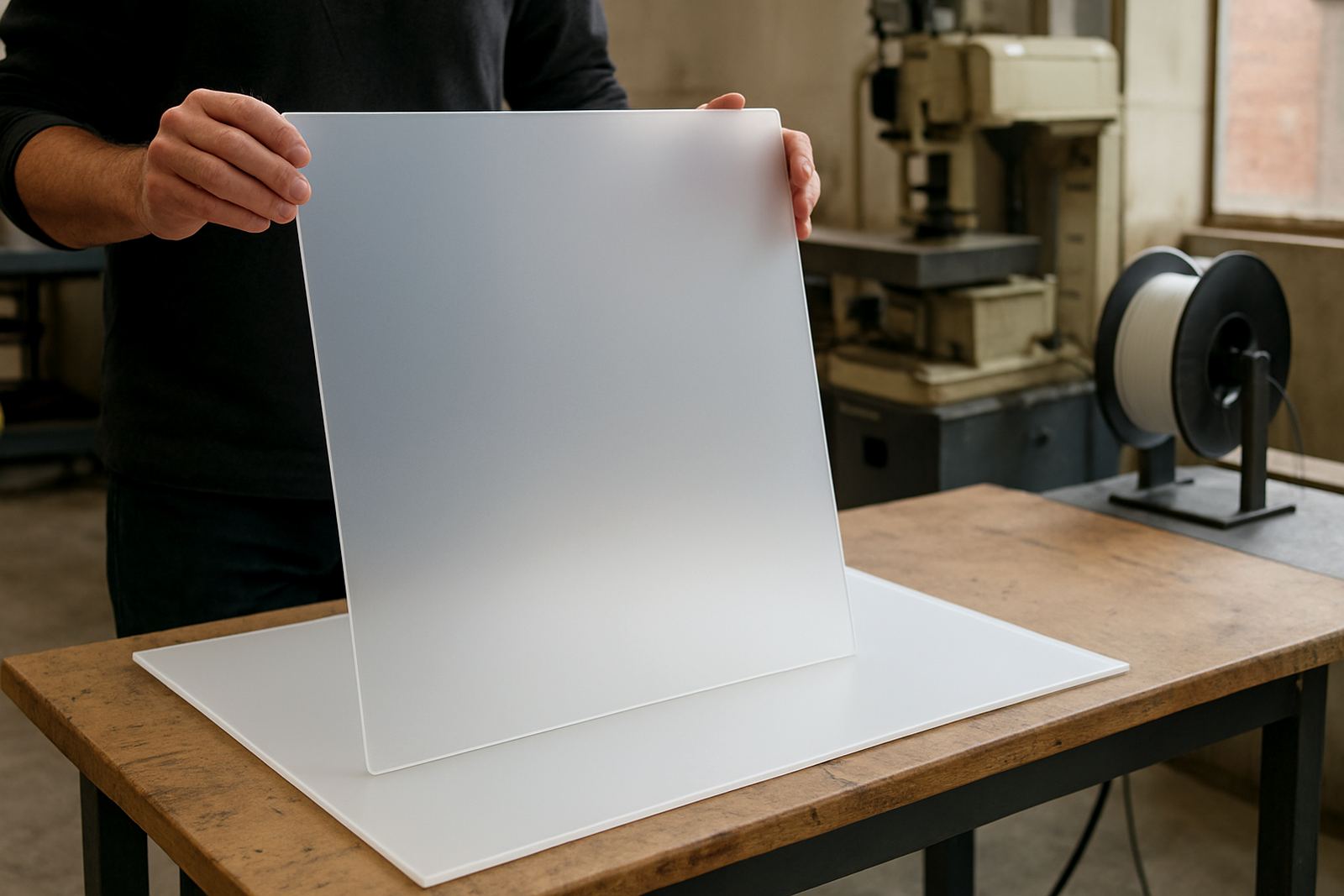
Signage gets handled more than people expect. Staff wipe it down, installers lift it, a trolley bumps it, and in coastal areas the air adds moisture and grime that show up quickly on cheaper materials. PETG sheet is a sensible choice for sign faces because it is tough enough for regular use, and it cuts cleanly for flat panels, infill sections and display covers.
For retailers in Cape Town, Paarl, Stellenbosch or Somerset West, that matters when a sign sits near an entrance or along a busy walkway. PETG gives a neat finish for internal signage and many external applications, especially where the panel is protected from direct weather. It is also useful when the brief calls for a clear face that still holds up under handling during installation and maintenance.
In a signage workshop, PETG is easy to work with for straight cuts, strip cutting, panel cutting and smaller custom pieces. That helps when the job needs multiple sizes for a chain store rollout or one-off fabrication for a local business in Epping or Montague Gardens.
Illuminated panels need material that stays even
Lightboxes and illuminated signs rely on a sheet that spreads light in a controlled way. PETG is often chosen for this because it can be supplied in the right thickness and cut to size for cleaner edges and better fitting into frames. When the panel sits behind graphics or vinyl, a consistent sheet makes the final sign easier to assemble and easier to keep aligned.
Where signage is used indoors, PETG helps with that clean illuminated look without making the panel feel bulky. For outdoor-facing lightboxes, the builder still needs to think through sealing, mounting, and whether the unit will be sheltered from heavy wind or rain. In a place like Cape Town, that is not just theory, wind can work loose on weak fixing points fast.
- Good for lightbox faces where a neat, consistent sheet is needed
- Useful for internal illuminated panels in shops, malls and reception areas
- Works well when the frame needs accurate sizing and clean edges
- Can be supplied with film left on to help keep the surface tidy during fabrication
Retail graphic builds need clean edges and accurate sizing
Retail signage is rarely just a sign board. It can include panel surrounds, menu boards, shelf strips, branded dividers, price displays and protective covers. PETG is a practical material for these builds because it can be cut accurately and finished neatly, which saves time when a fit needs to be right first time.
If the job involves multiple repeated pieces, small batch cutting or large batch cutting can keep everything consistent. That is especially useful for store refresh work where the same panel shape must be sent to several branches, or when a designer wants a set of matching display parts for a launch campaign. A clean finish matters because customers notice the edges, not just the graphic.
- Panel covers for promotions and product displays
- Clear guards for shelving, counters and brand bays
- Printed graphic backing pieces cut to exact size
- Small parts for displays that need hole marking or edge deburring
What signage fabricators should ask for before cutting
Before a sheet is cut, the workshop needs a proper brief. For signage work, a millimetre error can throw off the whole frame, especially if there are fixing holes, returns or overlapping trims. The right material advice up front can save you from trimming on site where time is tight and power may be out during load-shedding.
Useful details include finished size, whether the panel needs straight cuts or panel cutting, if holes must be marked, and whether the film should stay on until after installation. If the sign will be packed for courier, the job should also be labelled properly and protected in transit. That is important for clients outside Cape Town who need a clean arrival, not a scratched sheet and a delay.
For signage jobs, these points are worth confirming:
- Overall size and exact cut dimensions
- Sheet thickness required for the frame or mounting method
- Whether the material is for indoor use, covered outdoor use or full exposure
- If the finish needs film left on for fabrication or transport
- Whether edges should be deburred for safer handling
A local Cape Town example from design to fitment
A retail shop in Epping may need a set of clear sign faces for window branding, a backlit panel at the entrance, and a few internal display covers for pricing and product notes. The sheet sizes are not always standard, and the installer may need pieces cut for several frame depths. PETG is useful here because the order can be broken into the exact sizes needed and packed for the team doing fitment.
If the same client has branches in Bellville, Parow and Somerset West, the job can be prepared as a batch, labelled by branch, and couriered or collected as needed. That keeps the rollout orderly and helps the installer avoid sorting loose sheets on site. It also gives the customer a cleaner handover, which matters when the opening date is fixed and the signage has to go up on time.
In coastal suburbs, the team should also think about storage before fitment. Sheets should be kept flat, away from heat, and out of direct sun. That simple step prevents warping and protects the finish before the sign even reaches the wall.
When PETG is the right fit and when another choice may suit better
PETG is a strong choice when you want a clear or semi-clear sheet for signage, a material that machines well, and a finish that looks tidy in retail settings. It works especially well for internal and sheltered applications, shop displays, lightbox faces and protective covers. It is also useful when the fabricator needs accurate repeat cuts for several branches or a steady supply for ongoing work.
For very exposed outdoor signs, the full environment needs to be checked carefully. Sun, wind, salt air and fixing method all matter, and the sign maker should choose the sheet according to the job not just the look. That is where sensible material advice saves time and cost later. A good signage brief starts with the location, the frame, and the way people will use the finished piece.
If you are planning a signage job in Cape Town or beyond, PETG sheet gives you a practical middle ground: clean appearance, simple processing and reliable day to day use. For workshops that need cut-to-size supply, batch cutting, hole marking and courier packing, it is a material that fits real production work, not just the drawing board.