
Why PETG suits guards where visibility matters
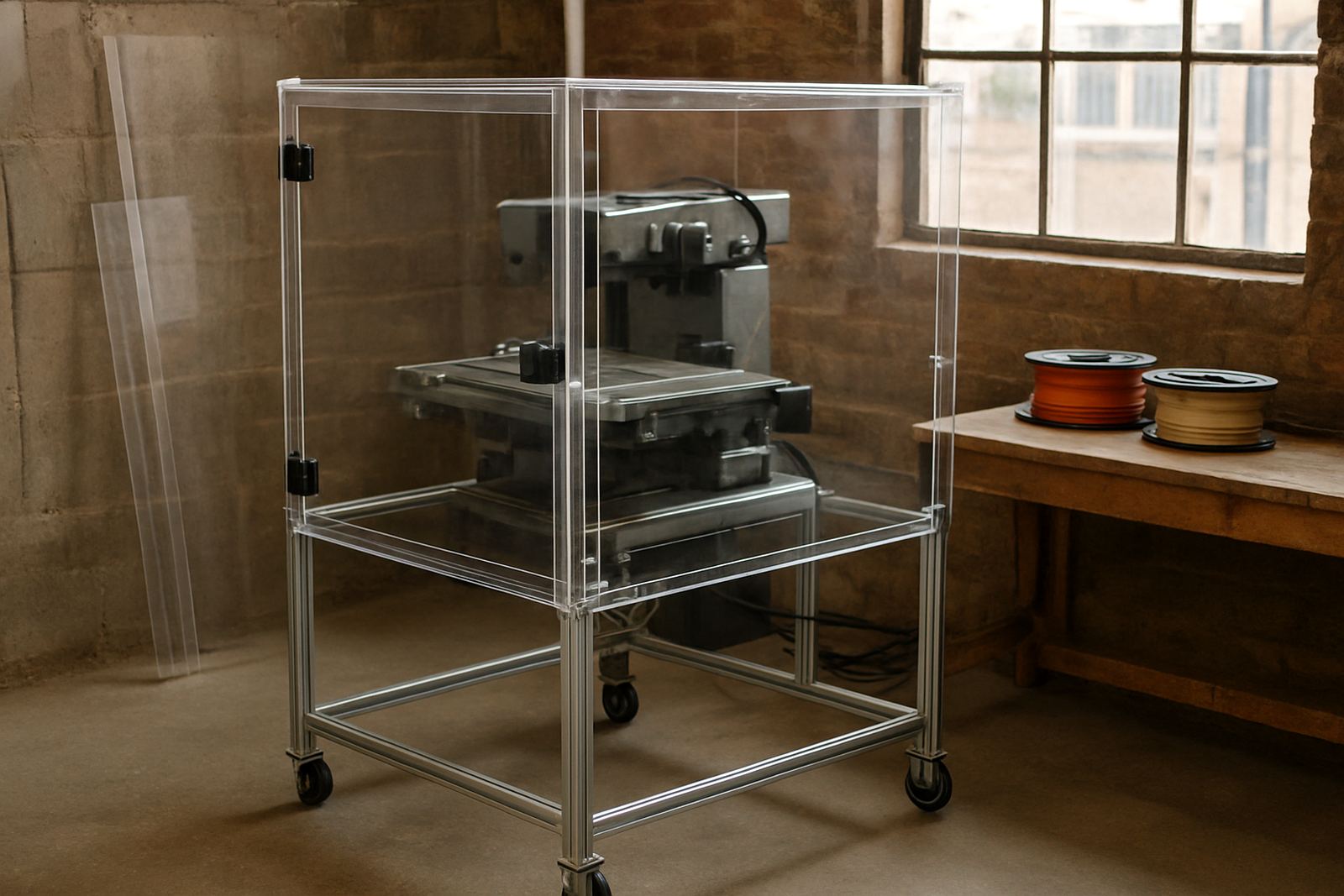
When a guard has to protect people without blocking the view, PETG is often a sensible choice. It is clear enough for operators to watch moving parts, read controls and monitor product flow, while still acting as a physical barrier against splashes, light contact and stray debris. In many South African workshops that matters just as much as strength, because a guard that hides the process usually gets bypassed or removed.
PETG also works well in spaces where guards need to be checked often. For example, a counter guard at a busy service point can be wiped down quickly, and a machine guard can be inspected for scratches, loosened fixings or wear before the next shift. In Cape Town and along the coast, that practical visibility is useful in humid areas where staff want to see whether moisture, dust or residue has built up behind the panel.
For many applications the appeal is simple: good clarity, easy cutting and enough toughness for regular use. It is not the same as using a barrier panel for every high impact or high heat situation, but for many general guarding jobs it gives a solid working option.
Common guard jobs where PETG gets used
We see PETG used in a wide range of guarding jobs, from factory floors to retail counters. The material can be supplied as full sheets or cut to size, which helps when a guard needs to fit around an existing frame, hinge or access opening. That saves time on site and reduces the amount of trimming a fitter has to do in the field.
Typical uses include:
- machine splash guards on light to medium duty equipment
- counter sneeze and contact screens for service areas
- protective covers around switches, gauges and control points
- screening for workshop sections where dust and debris are a concern
- temporary or permanent barriers around low risk process areas
In businesses that run after hours or during load-shedding windows, a pre-cut panel can also help if maintenance has to be done quickly between shifts. Instead of cutting on site, the guard arrives closer to final size which keeps fitting neat and cuts down on wasted material.
What to check before choosing the thickness
The right thickness depends on what the guard has to do. A light counter screen does not need the same specification as a panel that sits close to a moving machine part. If the panel must span a wider opening, stay flat and resist flexing, a thicker sheet is usually the better choice. If it will be mounted in a frame with support across the edges, a slimmer panel may be enough.
Before ordering, it helps to look at the following points:
- the size of the opening and any fixing points
- distance from moving parts, heat sources or sharp edges
- whether the panel must be clear, tinted or left with film on for installation
- how often it will be cleaned, lifted or replaced
- whether holes, edge finishing or strip cuts are needed for mounting
For many guard jobs, the most useful step is to measure the opening properly and allow for the fixing method. A panel that is 2 mm out can mean extra drilling, visible gaps or a poor seal at the edges. That is why careful cutting matters as much as the sheet itself.
Cut-to-size work helps guards fit first time
Guards often fail in the real world because they are awkward to fit, not because the material itself is wrong. A panel that arrives cut to the required size is easier to install, easier to keep aligned and less likely to rattle. If a job needs straight cuts, panel cuts, strip cutting or hole marking, those details can be handled before the sheet leaves the workshop.
That is useful for engineers, fabricators and shopfitters who need a clean fit without spending extra time on trimming. It also helps when several guards are needed across one site. Instead of ordering a large sheet and cutting each piece under pressure, the parts can be prepared in batch and labelled for the fitter.
In Epping, Cape Town, we often see this with local manufacturers who need repeat sizes for a line of guards or replacement panels. A well measured drawing or sample panel can save hours on installation, and it reduces the chance of a panel being drilled in the wrong place once the team is already on site.
A local example from a Cape Town production floor
A food packaging operation in the Cape Town area needed clear guards around a packing section where staff had to see product movement and access control switches quickly. The site also wanted something that could be cleaned daily and replaced without long delays. The original guards had become cloudy from cleaning and general wear, which made inspection harder and the area looked untidy.
By using PETG cut to size, the replacement panels were matched to the existing frames and supplied with the necessary holes marked before collection. Some panels were left with film on to keep them clean during fitting, and the edges were finished to reduce sharpness. The result was a neater installation, less time spent on site and a clearer working area for staff.
That kind of job is common across Cape Town, from Epping and Montague Gardens to Bellville and Somerset West. The point is not that every guard needs the same specification, but that the material should fit the working environment, the fixing method and the cleaning routine.
Cleaning, replacement and service life in South African conditions
South African working conditions vary a lot. Inland dust, coastal humidity, frequent cleaning and temperature changes all affect how long a guard stays presentable. PETG handles routine use well, but like any clear panel it will show scratches if staff use rough cloths or harsh tools on it. A simple cleaning routine makes a big difference.
Good practice includes:
- use a soft cloth and mild cleaner rather than abrasive pads
- avoid dragging tools across the panel during maintenance
- check fixings after vibration or repeated access
- replace panels that have become cloudy, cracked or badly scratched
- store spare sheets flat and out of direct sun where possible
For sites near the coast, keeping spare guards ready can be useful because salt air and heavy cleaning schedules can shorten the practical life of any clear panel. A replacement held in stock means less downtime when a panel needs swapping.
Ordering guards for collection in Cape Town or courier nationwide
For businesses working from Cape Town, sheet supply and cut-to-size service from Epping makes local collection straightforward. For teams outside the Western Cape, courier packing and nationwide delivery keep the process manageable, whether the job is one replacement panel or a small batch for multiple sites. That is useful for maintenance departments, fitters and production teams who need the same cut size again and again.
If you are planning a guard project, it helps to send accurate dimensions, a sketch if needed and any notes about hole marking, edge finishing or film left on for install. That makes it easier to advise on the right sheet size and cutting method, and it keeps the order practical from the start.
For many machine and counter guards, PETG is chosen not because it is fancy, but because it does the job without fuss. It is clear, workable and suited to a wide range of local fit-out and maintenance work.