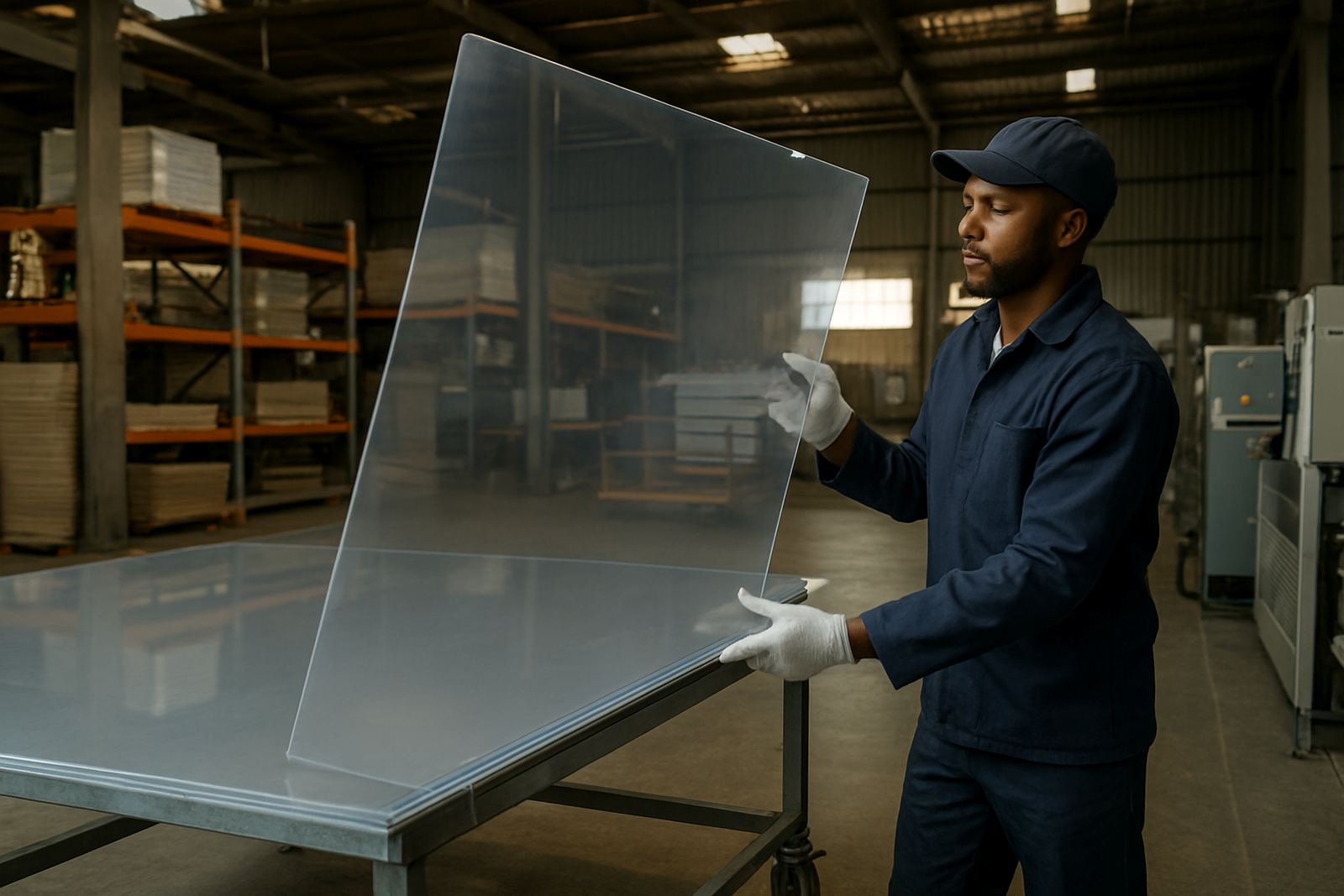
Industrial partitioning in Airport Industria
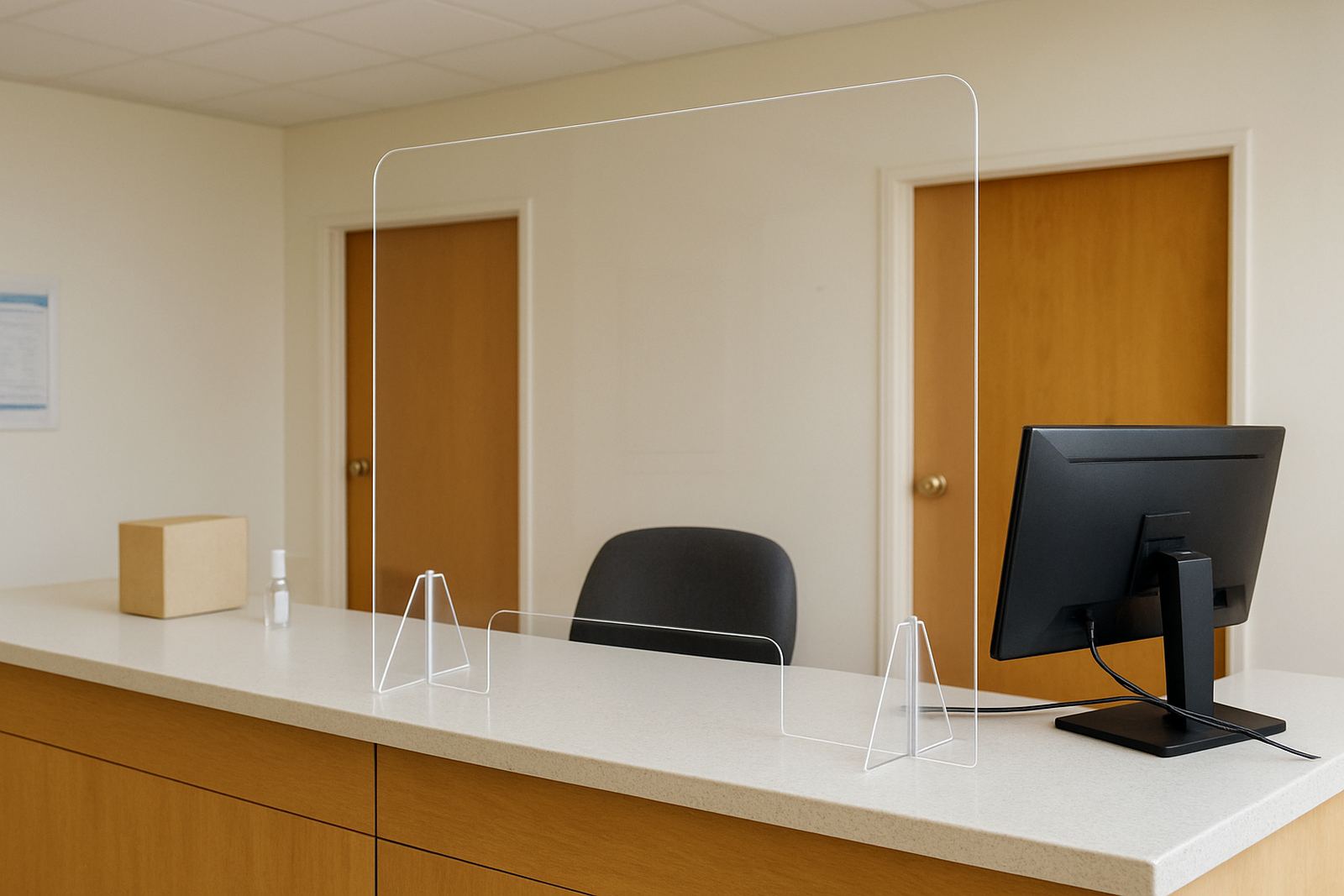
The brief came from an industrial client in Airport Industria, Cape Town, where internal partitioning had to do more than mark off space. The panels needed to separate work areas, improve safety around busy movement routes and still keep sight lines open for supervisors and team leaders. In a setting like this, brittle materials are a false economy, so the request was for thick PETG panels that could take daily handling without cracking or clouding quickly.
The site was working around shift changes and deliveries, so there was not much room for trial and error. We were asked to supply panels cut accurately from the start, with a clean finish and labels that made sorting at installation easier. The client also needed a material that would be practical for future maintenance, because replacing damaged sections one by one was part of the plan. The work had to be neat, and it had to fit first time.
- Client type: industrial operations team in Airport Industria
- Application: internal safety partitioning and protected work zones
- Requirement: thick PETG panels with accurate cutting and tidy edges
What the brief had to solve
The biggest constraint was impact resistance. The panels would sit in a high traffic area where trolleys, tools and moving stock could come into contact with the screens. There was also the issue of cleaning. The client wanted something that would stand up to regular wipe downs without going hazy or showing stress marks too quickly. On a plant floor, anything that scratches badly becomes a maintenance problem very fast.
Another issue was consistency across the full run. Some panels were standard rectangular sections, while others needed holes marked for fixings and support points. A few lengths also had to be kept in sequence so that the installation team could work faster on site. That meant careful job labelling, accurate cutting and enough control over the batch that every piece arrived in the right order. In other words, there was no room for mixed sizes or guesswork.
- Load conditions: regular handling, incidental knocks and repeated cleaning
- Finish requirement: clear, tidy, with minimal visible marking at the edges
- Installation need: labelled sets for quick fitting on site
Material selection and panel specification
For this project we supplied thick PETG sheet suited to safety partitioning, chosen because it offers a good balance of clarity, toughness and workable fabrication. The sheets were cut to the required dimensions in our Cape Town facility and prepared with edge deburring where needed. That mattered because sharp edges slow down installation and create unnecessary handling risk for the fitters.
The client also needed some panels with film left on until the last possible moment, which helped protect the visible faces during transport and fitting. Where the design called for mounting points, we completed hole marking before dispatch so the installer could move straight to drilling and fixing. The end result was a set of panels that arrived ready for the next step, not a stack of material that still needed sorting.
- Material: PETG sheet for industrial safety panels
- Cutting scope: straight cuts, custom sizing and panel cutting
- Extras: film left on, edge deburring and hole marking
Cutting, labelling and packing in Epping
All work was completed from our Epping base, where the order was processed as a coordinated batch rather than as separate loose sheets. That approach keeps the job moving and reduces handling errors. We handled the straight cuts first, then moved into custom sizing and the marked fixing points. After that, the panels were checked, stacked and labelled according to the install sequence provided by the client.
Because the site team needed a clean handover, we also packed the order for easier unloading and on-site movement. This is often the part people overlook, but on industrial jobs it saves time when the truck arrives and the crew has only a short window to work with. We kept the bundles organised, protected the sheet faces and made sure the sizes matched the schedule. It sounds simple, but it saves a lot of back and forth once the fitter starts.
- Location of work: Epping, Cape Town
- Batch format: small to medium run with matched panel sizes
- Packaging: courier-ready packing with clear job labels
Timeline from approval to dispatch
The full job moved through a three-week timeline. Week one covered final measurements, brief confirmation and material allocation. Week two was used for cutting, deburring, hole marking and checking each set against the job list. Week three covered packing, labelling and dispatch coordination so the delivery could slot into the client’s installation programme without causing delays.
That timing worked well because the site team was juggling normal operations at the same time. When a partitioning project sits inside a live industrial environment, the smallest delay can affect shift movement and supervision points. We kept communication practical and concise, and the order moved through without drama, which is usually what a good industrial job looks like. Not glamorous, just properly managed.
- Week 1: brief finalisation and material allocation
- Week 2: cutting, finishing and quality checks
- Week 3: packing, labelling and dispatch
Result on site and what changed
The finished panels gave the client a cleaner, safer divide between work zones without making the area feel closed in. The thick PETG performed well for the intended use, with enough strength for high-use partitioning and a finish that suited a working plant environment. The installation team reported that the labelled sets were easy to work through, and that the pre-marked holes and consistent sizes reduced the time spent on adjustments.
From our side, the main success was reliability. The order matched the brief, the panels arrived in sequence and there was no need for last-minute re-cutting. That matters on a site where every extra hour can affect operations and overtime. The client also appreciated being able to handle the panels without worrying about fragile breakage during movement, which is often the pain point on jobs like this.
- Improvement: quicker installation with fewer on-site adjustments
- Benefit: safer handling during transport and fitting
- Outcome: consistent partitioning panels ready for live industrial use
What we would do again for a similar job
For a repeat project of this type, we would keep the same approach: confirm the fixing points early, cut in labelled batches and protect the sheet faces for as long as possible. For industrial partitioning, those steps remove avoidable problems and keep the site team moving. If the client needed replacement sections later, we would repeat the same sizing records so new panels slot in with no fuss.
We would also keep using a measured, practical handover rather than trying to overcomplicate the order. Thick PETG is a good fit for this kind of environment when the cuts are accurate and the packing is done properly. The job proved that simple, well-managed supply work still makes the biggest difference on a busy floor, especially where safety and uptime both matter. That is the part we focus on every time.
- Keep the batch sequence clear from the start
- Confirm all hole marking before cutting begins
- Pack by install order for faster site handling
Key facts
| Project | Airport Industria Panels |
|---|---|
| Client type | Industrial operations team in Cape Town |
| Material | Thick PETG safety panels |
| Work done | Straight cuts, custom sizing, panel cutting, hole marking, edge deburring |
| Location | Epping, Cape Town |
| Timeline | 3 weeks from approval to dispatch |