
A Gallery Job With Tight Tolerances
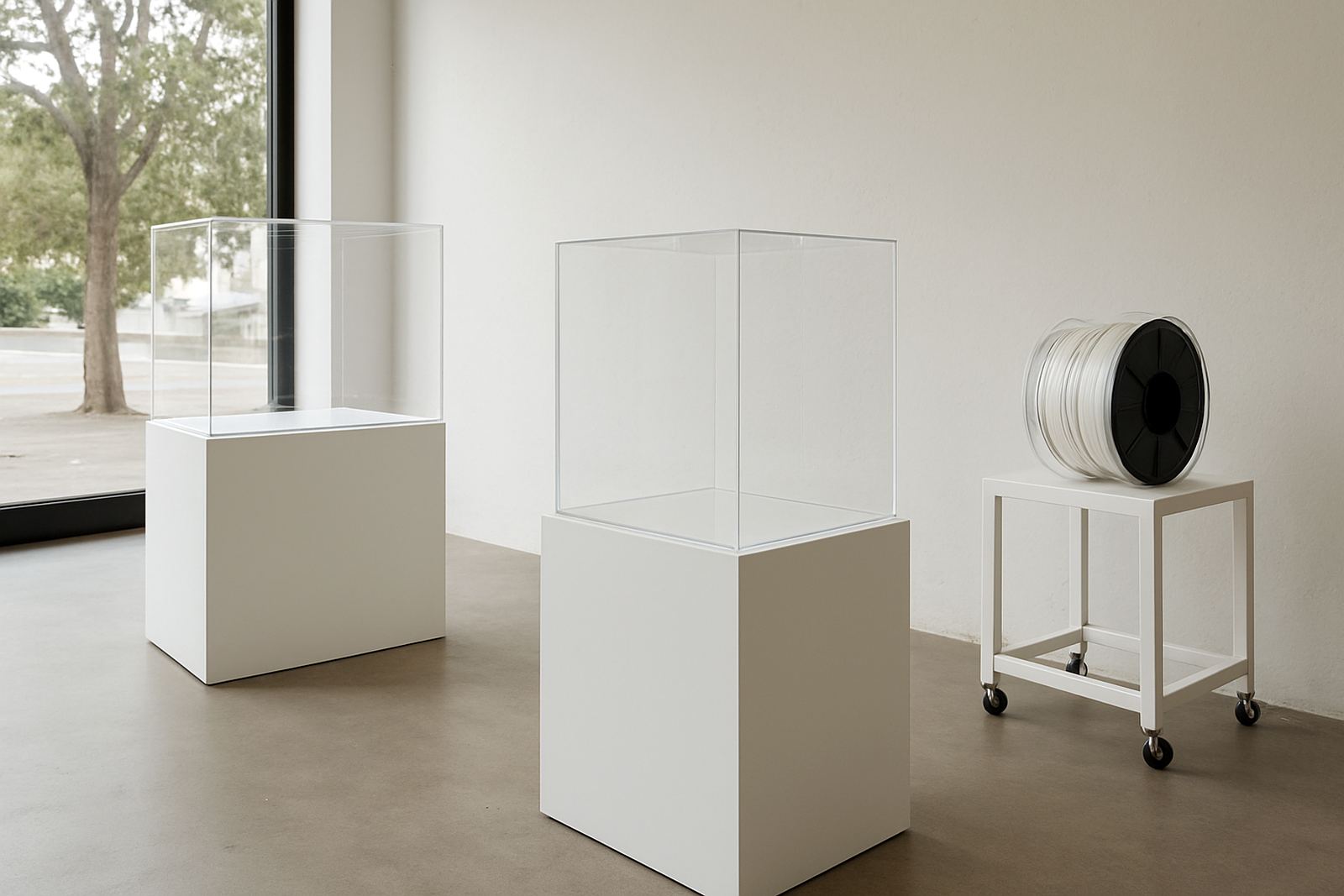
The client was a small exhibition and framing team in Newlands, Cape Town working on a run of display cases for a local gallery space. Their main concern was keeping the exhibits visible while adding protection against dust, fingerprints and minor knocks from daily foot traffic. The panels had to look clean from the front and still be easy to fit on site.
They came to us with a practical brief: supply clear PETG sheet cut to exact sizes, with smooth edges and enough consistency for multiple cases across the same venue. The project also needed a material that would cope with Cape Town conditions, where sunlight through windows and coastal humidity can affect some plastics over time.
What the Brief Needed To Solve
The gallery had a mix of case sizes, some for tabletop display and others for taller wall-mounted units. That meant the panel set was not one standard size, and the cutting had to be accurate enough to reduce on-site trimming. They also asked for a clean finish because the covers sit close to the artwork and the frames.
- Clear PETG for high visibility over the exhibit contents
- Cut-to-size panels for several different case openings
- Smooth edges to reduce handling marks and snagging
- Film left on where needed to protect the face during installation
- Job labelling so each panel could be matched quickly on site
We also discussed whether any areas needed hole marking for fixings. In the end only a few panels needed marked positions for clips and hinges, so we handled those on the cutting table before dispatch.
Material Choice And Cutting Details
We supplied clear PETG sheet because it is a good fit for indoor display work where clarity and handling matter. For this type of job, the material needed to stay neat, resist cracking better than brittle alternatives and hold its appearance during repeated cleaning. The project used sheets in a practical thickness range for protective covers, with enough rigidity for the larger openings and enough ease of handling for the smaller units.
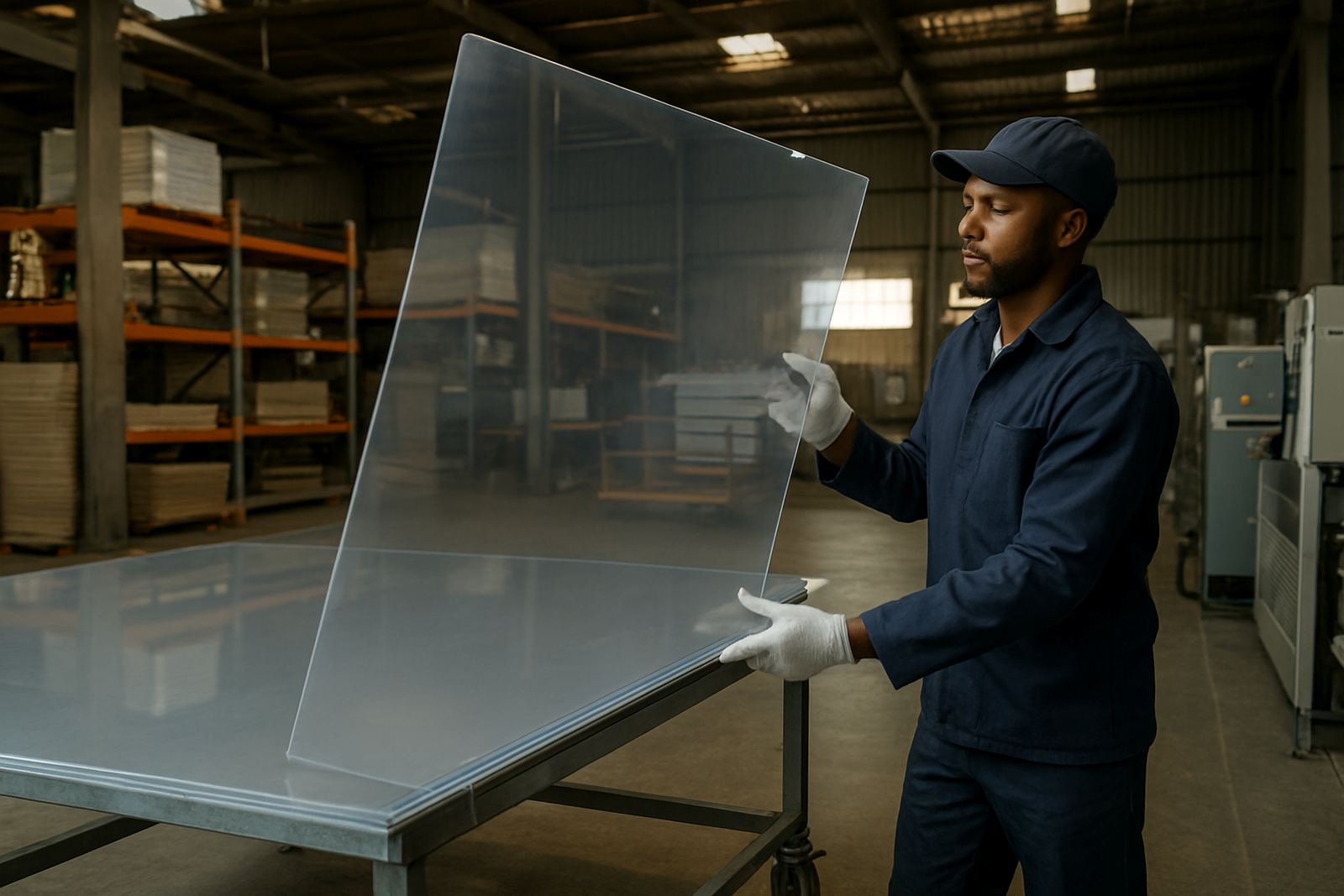
Our production team in Epping measured each panel against the supplied schedule and cut the sheets to the required sizes. Straight cuts were used for the main covers, while a few pieces needed strip cutting for narrower infill sections. Edge deburring was done on the visible sides so the panels could be handled safely during fitting. We kept the protective film on the faces that would be exposed during transport and installation.
Because the gallery wanted a tidy handover, each bundle was labelled by location and opening number. That saved time for the fitter and reduced the chance of mixing up panels on a busy install day.
Timeline, Packing And Courier Move
The full job ran over two weeks from first measurement confirmation to final dispatch. Week one was for specification checking, size confirmation and production planning. Week two covered cutting, edge finishing, labelling and courier packing. The client needed the panels quickly but not at the cost of accuracy, so we kept the process steady and checked each batch before packing.
For transport, the sheets were packed flat with protective layers between pieces to limit scuffing. The stack was reinforced for courier handling, which matters when panels are heading through local depots, then on to a site where the installer needs the material in good condition. We do this often for jobs going out of Cape Town and into the broader Western Cape, and it helps when the pack is labelled clearly from the start.
- Flat-packed to reduce transit marking
- Protected faces kept separate with interleaving
- Bundle labels matched to the install list
- Courier-ready packing for nationwide delivery if needed
Results On Site In Newlands
The finished panels fitted the cases with minimal adjustment on site. The installer was able to move through the job in order, because each piece was labelled and cut to the correct opening. The clear finish kept the displays visible without drawing attention away from the exhibits, which is what the gallery wanted from the start.
From a maintenance point of view, the client now has covers that can be wiped down and removed when needed without the chipping issues they had with a previous material. The gallery also liked that the panels felt stable in use. For a space with regular visitors, that matters more than people sometimes think.
There were no delays caused by re-cutting, and the gallery team said the final fit made the space look cleaner and more ordered. That is usually the sign of a good cut-to-size job: once installed, it should disappear into the work and simply do its job.
What We Would Repeat On The Next One
If we were doing this same kind of gallery case project again, we would keep the same process: confirm every opening before cutting, label every bundle, and keep the film on until the final fit. For display work, those simple steps save a lot of time once the job reaches the site.
We would also ask for the full install sequence upfront, because that helps us organise the cut order and reduces handling. When a project has several panel sizes and a mix of fixings, a clear sequence makes the whole thing smoother for the fitter and for the client.
- Confirm opening sizes before production starts
- Keep protection film on until installation
- Use clear job labels for each panel set
- Allow for site handling and final fitting order
For galleries, museums and framed display spaces in Cape Town, PETG is often the practical choice when you need clarity, easy handling and cut sizes that arrive ready to use. It works well for small runs and larger batches alike, especially when the job needs careful packing and local support from an Epping supplier.
Key facts
| Project | Newlands Gallery Cases |
|---|---|
| Client type | Gallery display and exhibit fit-out team |
| Town | Newlands, Cape Town |
| Material | Clear PETG sheet |
| Services used | Straight cuts, custom sizing, edge deburring, job labelling, courier packing |
| Timeline | 2 weeks from confirmation to dispatch |