
When a thermoformed part has to look right and still take daily handling
Thermoformed parts are usually chosen when a flat sheet must become a shaped component without going to full injection moulding costs. In workshops, production lines and small fabrication runs, PETG works well for clear covers, guard panels, display trays, instrument housings and formed inserts. It takes heat evenly and can be cut after forming with standard workshop tools, which makes it handy for local production in Cape Town and for jobs that need to be couriered out to the rest of South Africa.
Clients often come to us when a part needs more structure than acrylic, but they still want a clean finish and decent impact resistance. For humid coastal areas like Cape Town, Somerset West and the coast around Paarl's supply routes, PETG is also easier to live with than materials that can go brittle or craze when handled often. It is a sensible option for one-off prototypes, replacement parts and small production runs where the final fit matters.
Typical equipment and forming set-ups that suit PETG
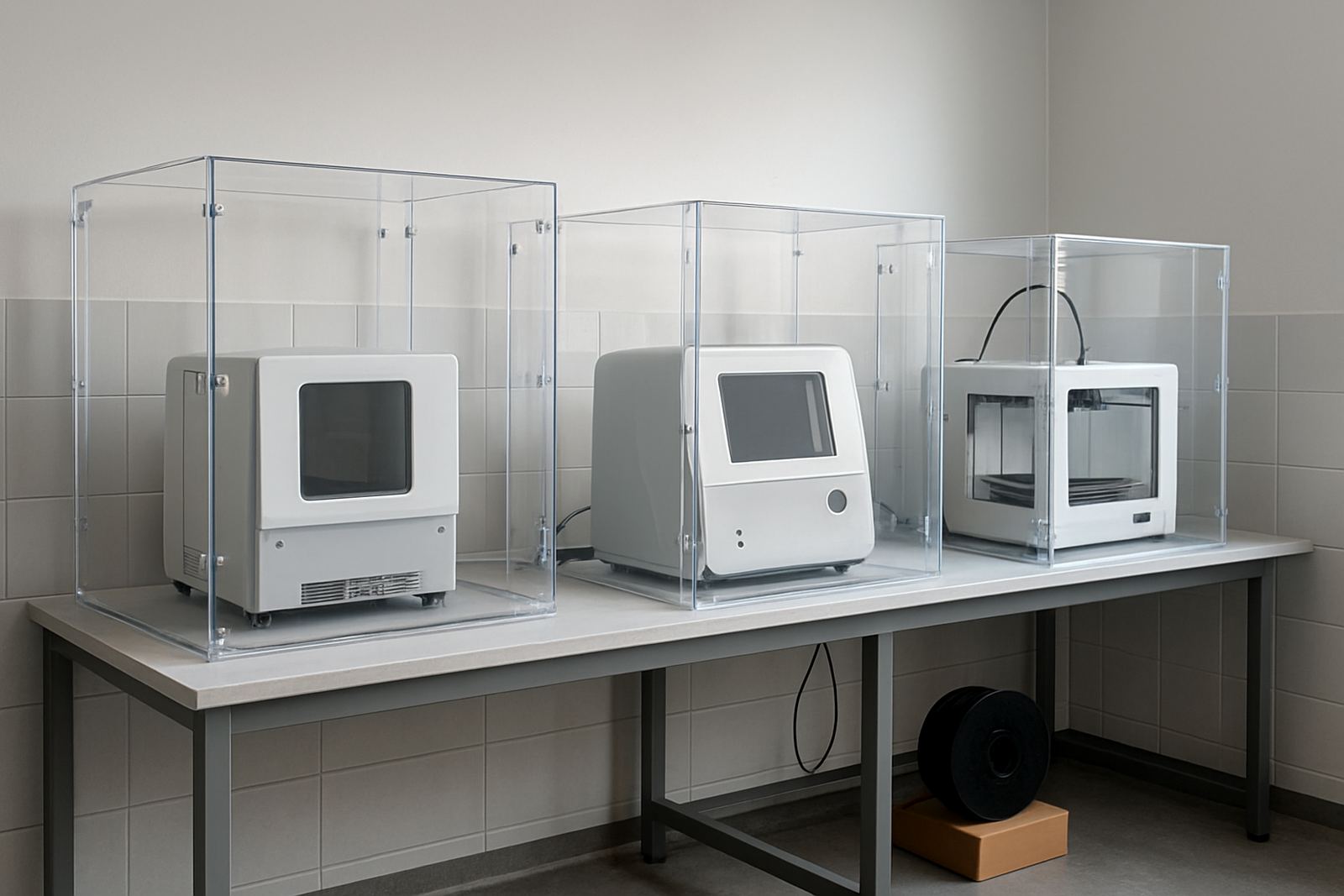
Most thermoformed parts start with a sheet, a mould and a heating setup. The equipment can be simple or more specialised depending on the job. For a small run, a workshop may use a heated frame, a vacuum forming table and a machined or timber mould. For bigger quantities, the process usually needs better temperature control, repeatable clamping and careful trimming after forming.
- Vacuum forming table for trays, covers and shallow shells
- Heated moulds for repeated parts with the same shape
- Forming frames that keep the sheet steady during heating
- Trimming jigs and templates for accurate edge finishing
- Hole marking and post-form drilling for fittings, vents or fixings
We supply PETG sheet cut to size from Epping, so the forming team starts with material that already matches the blank size needed for the mould. That saves time, reduces waste and helps keep the edges tidy before the first heat cycle.
Planning the part before the first sheet is heated
Good thermoforming starts with the layout, not the heater. A flat pattern must allow for draw depth, corner radius, flange size and trimming allowance. If a mould is too deep for the sheet thickness, the corners can thin out and the finished part may warp later. If the flange is too narrow, there may not be enough material left for fixing or finishing.
When you send through a query on our contact page, it helps to include a sketch, a sample part or a few clear dimensions. We can then advise on sheet size, cut tolerance and whether the job suits straight cuts, panel cutting or small batch cutting. For custom enclosures and shaped covers, it is also worth planning for vents, cable entries, access points and any mounting holes before the part is formed. It is far easier to mark and cut those positions early than to force them in after the fact.
- Depth to width ratio for the mould
- Wall thickness needed after stretching
- Flange width for fastening or sealing
- Allowance for trimming, deburring and final fit
- Any film left on while handling or machining
Common mistakes that push up scrap and rework
Most forming problems come from trying to save a little material at the start and losing a lot more later. A sheet that is too small may still form, but the corners can pull thin and the part then needs replacement. Uneven heating can leave cloudy marks or a part that does not sit flat. Rough trimming can also chip the edge or leave burrs that catch during fitting.
Another common issue is leaving too little allowance for the final trim line. A formed tray might look fine off the mould, then fail once the fitter starts drilling or deburring it. For jobs in dusty workshop environments or near coastal humidity, handling is also important. Keep the sheet clean, store it flat and protect it during transport. We can courier packed sheets nationwide, or arrange collection from Epping, Bellville, Parow, Montague Gardens, Claremont, Somerset West, Paarl or Stellenbosch collection points depending on the job.
Budget ranges for prototypes, short runs and larger batches
Budget depends on sheet size, thickness, quantity and how much finishing is needed after forming. For a simple prototype or sample set, clients often budget from about R250 to R900 for material when only a few blanks are needed. Small production batches usually land between R1 200 and R6 000, especially where cut-to-size sheets, labelling and courier packing are part of the job.
For larger batch cutting and repeat runs, the cost per part can come down if the mould is fixed and the trimming pattern stays the same. As a rough guide, the material and preparation for a run of thermoformed covers or trays may sit anywhere from R6 000 to R25 000 and up, depending on the sheet thickness and quantity. If the project needs strip cutting, hole marking or edge deburring before forming, those steps can be priced in as part of the setup so the workshop knows the real total before production starts.
Why local sheet supply helps the forming team keep pace
Thermoforming work rarely follows a neat schedule. A mould may need one more adjustment, or a test pull may show the blank needs to be wider by 10 mm. Having sheet cut locally in Cape Town makes those changes quicker to manage. It also helps when a client in manufacturing, design or prototyping needs a replacement part before the end of the week and cannot wait for long lead times.
Our team handles material advice, custom sizing, panel cutting, small batch cutting and courier packing from Epping. Morne van Rensburg oversees the operation, with support from Ayanda Mkhize, Jared Petersen, Zanele Ndlovu, Ruan Botha and Tumi Molefe. If your next thermoformed part needs a cleaner pull, a better fit or simply fewer delays on site, send the dimensions through and we will advise on the right sheet size and handling method.