
Where protective screens fit in day to day operations
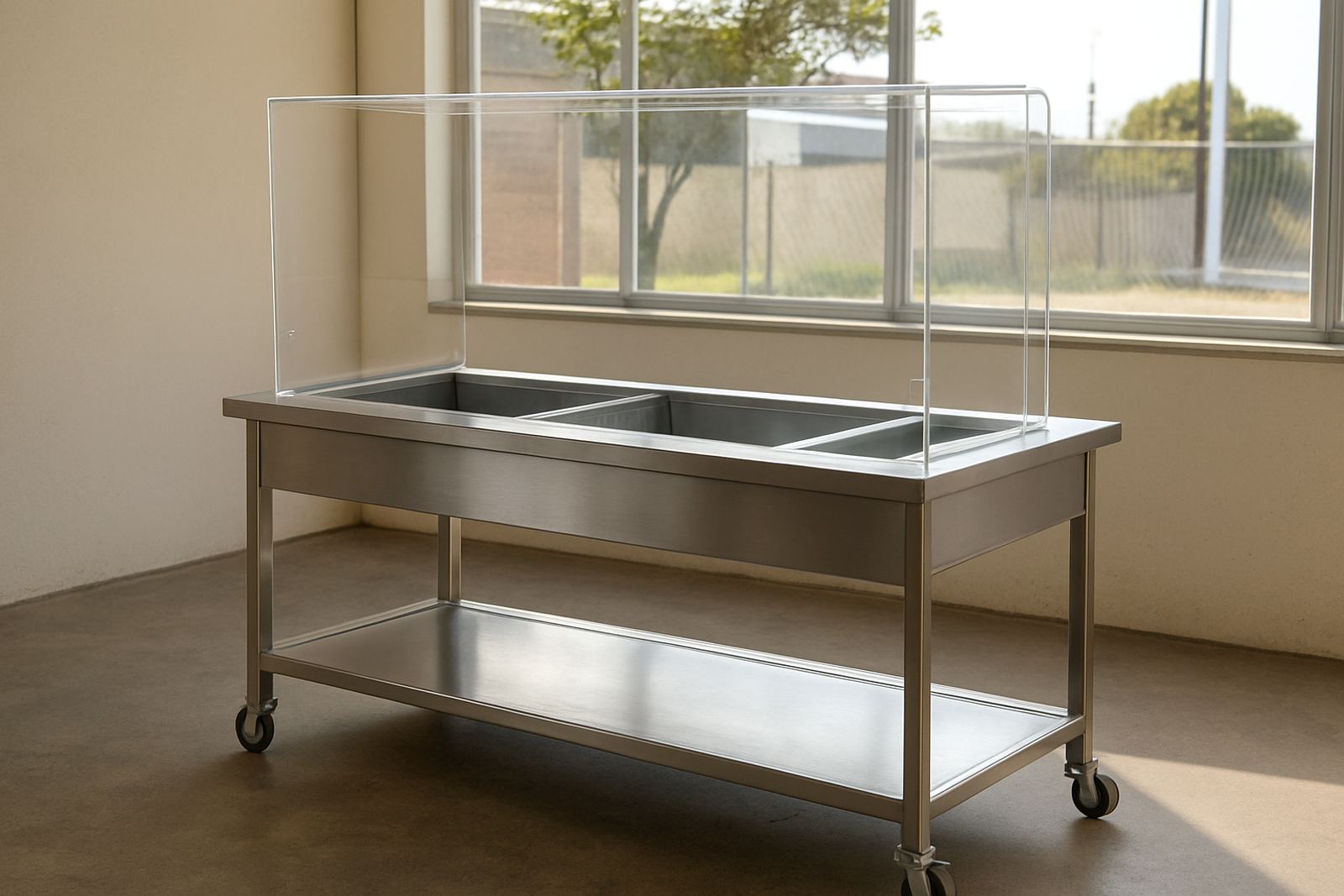
Protective screens are used wherever people need to speak, pay, serve or consult across a boundary. In Cape Town offices, retail counters, medical rooms, teller points and reception counters, a PETG screen helps create a clear barrier without blocking sight lines. That matters when staff need to see faces, read documents, and keep a counter layout practical for busy trade.
For many businesses the screen is not about creating a sealed room. It is about reducing close contact in a sensible way, especially where there is public foot traffic, wind from an open doorway, or a queue that sits close to the counter. PETG works well in these situations because it stays clear, handles regular wiping, and can be made to suit narrow ledges or wide service counters. On the coast, where humidity can be higher, it is still a reliable material for day to day use.
We cut sheets to the exact size you need, whether the requirement is a small till divider or a full counter barrier for a reception run in Bellville or Claremont.
Typical setup for a counter screen installation
A proper screen setup usually starts with the counter size, the height needed for seated or standing staff, and the position of the opening. Many customers ask for a central pass-through slot, a bottom gap for documents, or a raised section where parcels can be placed. The aim is to protect staff without making the counter awkward to use.
The usual material set is straightforward:
- PETG sheet cut to size for the main panel
- Mounting feet, brackets or standoff fixings depending on the counter
- Optional edge deburring for safer handling
- Hole marking for bolts, clips or screw positions
- Film left on until final installation to reduce marks during transport
In most cases, customers bring a rough sketch, measurements from the counter top, and an idea of where the opening should sit. If the counter is in a busy area like Epping, Montague Gardens or Paarl, it helps to plan the fixing points early so the screen can be installed quickly and used the same day.
Planning the layout before you cut
The best results come from measuring the working side of the counter, not just the visible front. Check where staff chairs move, where cash drawers open, and whether the screen needs to clear card machines, printers or forms trays. A screen that is too tall can make a small counter feel boxed in, while one that is too low may not give much practical value.
For offices with load-shedding backup and dimmer internal light, a clear PETG panel is often preferred because it does not make the area feel closed off. If the screen will stand near an entrance, keep in mind the breeze from doors and the possibility of dust being pushed through from outside. In Stellenbosch, Somerset West or coastal branches, a good fit matters because screens can be exposed to sun and regular cleaning more often than people expect.
When planning the panel shape, think about how documents move across the counter. A simple horizontal pass gap is often enough, but in some settings a lower opening is better for signed forms, small parcels or ID checks. We can cut straight edges, panel openings and hole positions to match the layout you are working with.
Common mistakes that make screens awkward to use
One common mistake is ordering a screen to the exact wall-to-wall measurement and forgetting about brackets, feet or edge clearance. Another is choosing a height based only on appearance instead of the way staff actually work behind the counter. If a receptionist has to lean around the panel all day, the setup quickly becomes tiring.
Other mistakes include using the wrong thickness for a long panel, skipping edge finishing, or leaving no allowance for cleaning access. A panel that is too thin can flex on a wide span, while a panel that is too large for the support points can shift over time. In some cases, customers also forget that printed notices, stickers or laminated signs need a clean area on the screen itself.
- Measure the installed space, not only the open counter width
- Allow for fixing hardware and small gaps at the sides
- Keep the pass-through opening practical for the type of work done
- Choose a thickness that suits the span and daily use
- Plan cleaning access so the screen can be wiped properly
These small checks save time and reduce rework, especially when the screen is part of a larger counter fit-out.
Budget ranges for small counters and larger public areas
Protective screen pricing depends on size, thickness, cut complexity and whether you need batch quantities for several branches. A small single counter screen for a reception point or service counter may start from around R350 to R900, depending on the panel dimensions and any holes or shaped cuts. A larger screen for a bank-style counter, clinic or multi-service point can move into the R1,200 to R3,500 range, especially when the panel is wide and needs extra care in handling.
For multiple sites, small batch cutting is usually more practical. If you need ten screens for different counters across Cape Town, the Western Cape or further inland, we can cut them together and label each job so installation is easier. Courier packing is important for these orders because flat panels need to arrive without scratches or damage, and the final cost will depend on size and destination.
When clients ask for a budget guide, it helps to separate the panel cost from the fitting hardware. Some counters only need a sheet with simple feet, while others need more precise hole marking or several openings. That is why we quote from the actual layout, not from a one-size-fits-all assumption.
Collection in Epping and courier delivery nationwide
PETG sheets for protective screens are cut in Epping, Cape Town and can be collected from the local area or couriered nationwide. Customers often collect for urgent fitments in Parow, Bellville, Claremont or Somerset West, while businesses outside the Western Cape use courier delivery for branch rollouts and replacement panels. If you are in a busy environment, a labelled order with the screen size and opening position written clearly helps the install go faster.
Our team can advise on the right cut, support points and finish for the job. If you are planning a new counter layout, replacing damaged panels or setting up several public-facing screens at once, send the measurements through the enquiry form and we will help you work out the practical details.
- Straight cuts for standard rectangular screens
- Custom sizing for counters, reception points and service windows
- Hole marking for fixings and stand-offs
- Edge deburring for safer handling during fitting
- Courier packing and job labelling for multi-site orders