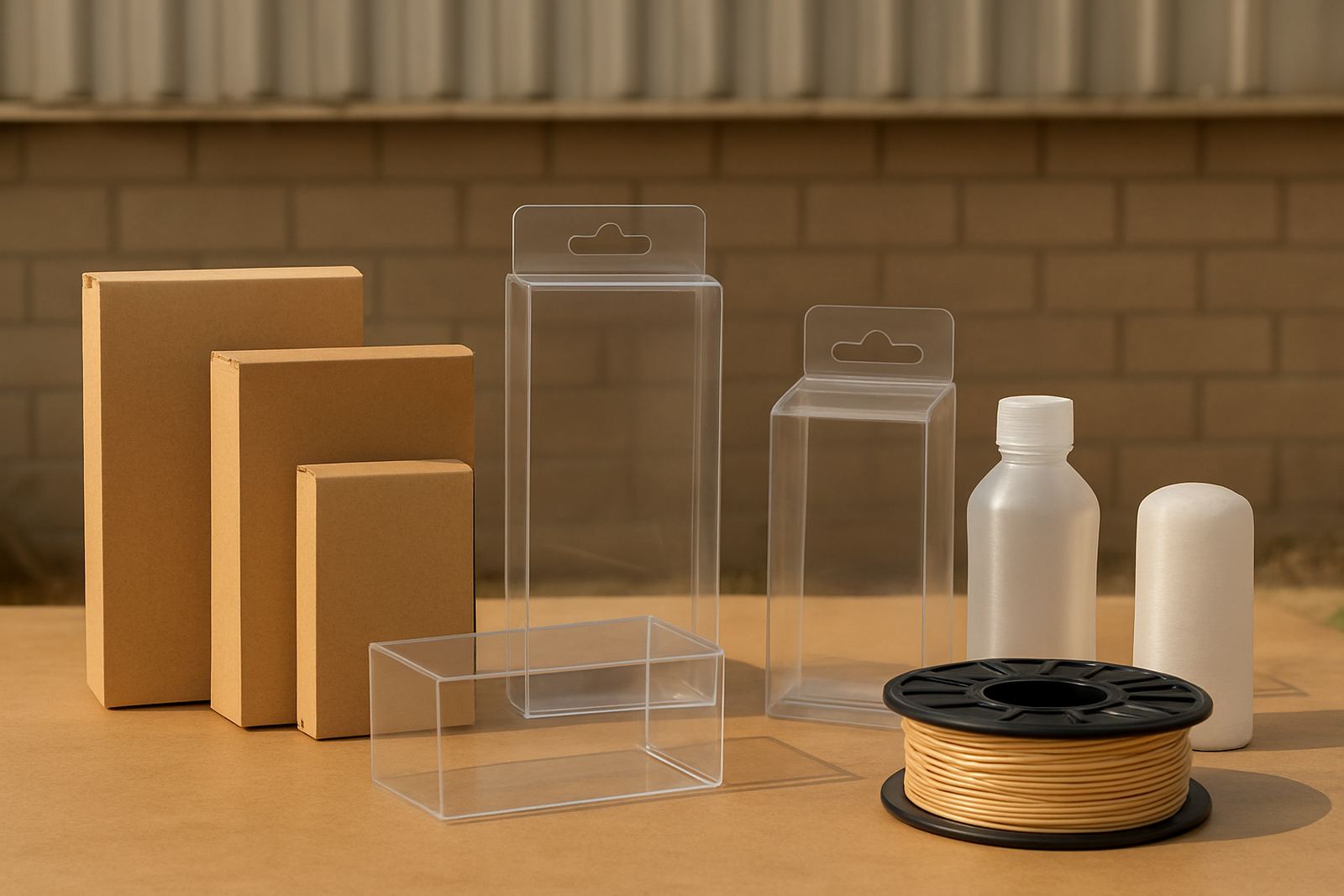
Why PETG works well for packaging mock-ups
Packaging prototypes often need to do two jobs at once: show the final look and survive repeated handling during meetings, transport and testing. PETG sheet suits that job because it cuts cleanly, forms well and keeps a neat appearance even after a few rounds of fitment checks. For brands that want a clear window, a rigid sleeve or a printed insert holder, PETG gives a dependable result without the brittle feel you sometimes get from cheaper sheet materials.
In Cape Town and the surrounding industrial areas, many clients use PETG for short-run display packs, point-of-sale samples, and pre-production cartons with transparent sections. It is also a sensible option when you need to check shelf visibility, product presentation or customer handling before approving artwork and tooling. If your product will be couriered or hand-delivered between offices, PETG can take the knocks far better than basic presentation plastics.
- Trial packs for new product launches
- Sample holders for sales meetings and trade shows
- Clear lids, sleeves and windows for carton tests
- Presentation pieces for approval by buyers or retailers
Typical client situation and what usually needs to be solved
Most packaging prototype enquiries start with a practical problem. The client may have a carton design that looks fine on paper, but the opening is too tight, the product rattles inside or the clear section distorts the print. Sometimes the issue is presentation: the sample has to sit neatly on a shelf, travel to Johannesburg or Durban without damage, and still look tidy when opened in front of a buyer. That is where a cut-to-size PETG sheet order helps, because you can test the real dimensions before spending money on full tooling.
We often work with manufacturers, product designers and small brands in Epping, Montague Gardens, Bellville and beyond. Some need one prototype, others need a small batch for regional sales teams. If you are building a pack for a fragile item, food contact insert, cosmetic display or hardware sample, the planning stage matters just as much as the material. Think through how the pack opens, where the product sits, whether the edges need deburring, and if film should stay on until final assembly to avoid scratches.
- Check product dimensions, including any protruding tabs or closures
- Decide whether the pack needs full clarity or only window sections
- Confirm if holes, slots or fold lines are needed for assembly
- Plan how the prototype will be transported and stored in humid or dusty conditions
Layout planning before you cut a first sample
A good prototype starts with a proper layout. Measure the product first, then allow for material thickness, glue flaps, folds and any locking tabs. In packaging work, a few millimetres can decide whether the sample sits snugly or looks forced. For clear windows or protective sleeves, leave enough space so the product can be removed without scuffing the edges. If you are testing a visual pack for retail, consider how lighting will hit the sheet, because glare can change the look on a shelf or in a boardroom.
Our team in Epping can assist with straight cuts, panel cutting, strip cutting and hole marking, which helps when the prototype needs repeated assembly checks. For larger runs, batch cutting keeps dimensions consistent across all sample units. If you are combining PETG with printed board, tape, clips or foam inserts, make sure each component is matched to the same reference size. That saves time and reduces waste when you move from sample to short production run.
Common planning points include thickness choice, edge finish, and whether film should stay on during handling. On packaging samples, people often want a spotless appearance but forget that workshop handling, courier packing and client demos can mark a bare surface quickly. Keeping the protective film on until final assembly is often the safer choice, especially when the sample will travel from Cape Town to another province.
Common mistakes that push up cost and delays
Packaging prototypes can become expensive when the first sample is treated like the final product. The biggest mistake is approving a size without checking how the material behaves when folded or slotted. PETG is forgiving, but it still needs room for practical assembly. Another common issue is asking for a tight tolerance when the design has no allowance for cutter width, thermal movement or manual handling. That leads to rework, and rework adds Rand quickly.
Another problem is choosing the wrong finish for the job. If the sample will be handled by buyers in a showroom, edge deburring matters. If the piece is only for internal approval, you may not need every edge perfect on the first pass. Also keep in mind the transport side: a prototype that looks fine on the cutting table may arrive with scratches if it is not packed properly. Courier packing and job labelling help, but only if the design itself allows the piece to travel safely.
- Skipping a carton mock-up before cutting the clear piece
- Ordering too little material for test pieces and revisions
- Ignoring the effect of heat, dust or coastal humidity on storage
- Forgetting to label revisions clearly between sample rounds
Budget ranges for prototype runs in Rand
Prototype budgets depend on sheet size, thickness, quantity and how much finishing is required. For a simple one-off packaging sample, you may only need a small sheet and a straight cut, which keeps costs modest. Once you add custom sizing, hole marking, edge deburring and multiple test units, the price climbs with labour and setup time. As a rough guide, a basic trial piece can start from about R150 to R350, while more involved sample sets can move into the R500 to R1 500 range depending on quantity and complexity.
If you are preparing a sales presentation or buyer meeting, it is often worth budgeting for two or three versions. That lets you test a clear window version, a thicker presentation version and a transport-safe version before approving the final pack. For larger batch cutting or repeated revisions, it is usually smarter to order enough material for at least one spare set. In packaging work, the spare often saves the day when a client asks for a last-minute change.
We can also advise on material usage so you do not overspend on over-sized sheets. For clients collecting from Epping or nearby areas like Parow, Bellville, Claremont or Somerset West, that planning can make the difference between a quick collection and a second trip back for revisions.
How Cape Town and nationwide supply fits the prototype process
Packaging prototype work often moves fast. A designer in Cape Town may need a cut sample today, while a sales team in another province needs courier delivery for a meeting later in the week. That is why collection and courier planning matter from the start. Sheets cut to size in Epping help local clients get moving quickly, while couriered filament supports workshops and makers who are refining tooling, fixtures or presentation aids for the same project.
For businesses operating in load-shedding conditions, it helps to keep the prototype plan simple and practical. Avoid designs that rely on complicated heating or long machine time unless you have scheduled capacity. In humid coastal areas, store sheet flat and clean, away from direct sun and dust. For municipal or retail environments, also check whether the final pack needs to meet display rules, tamper considerations or shelf dimensions set by the buyer. A clean prototype makes those checks much easier.
Our contact page enquiry form is the best way to send dimensions, quantities and reference notes. That gives the team enough detail to advise on size, finish and the most suitable cutting method for your packaging trial.