
Why PETG suits busy menu covers
Menu covers get handled all day, wiped after every sitting, and packed away again for functions. PETG is a practical choice because it stays clear, takes regular cleaning, and has better impact resistance than many basic plastic options. For hospitality teams in Cape Town, the Western Cape and coastal towns, that matters when menus move between indoor dining, deck service, and humid storage rooms.
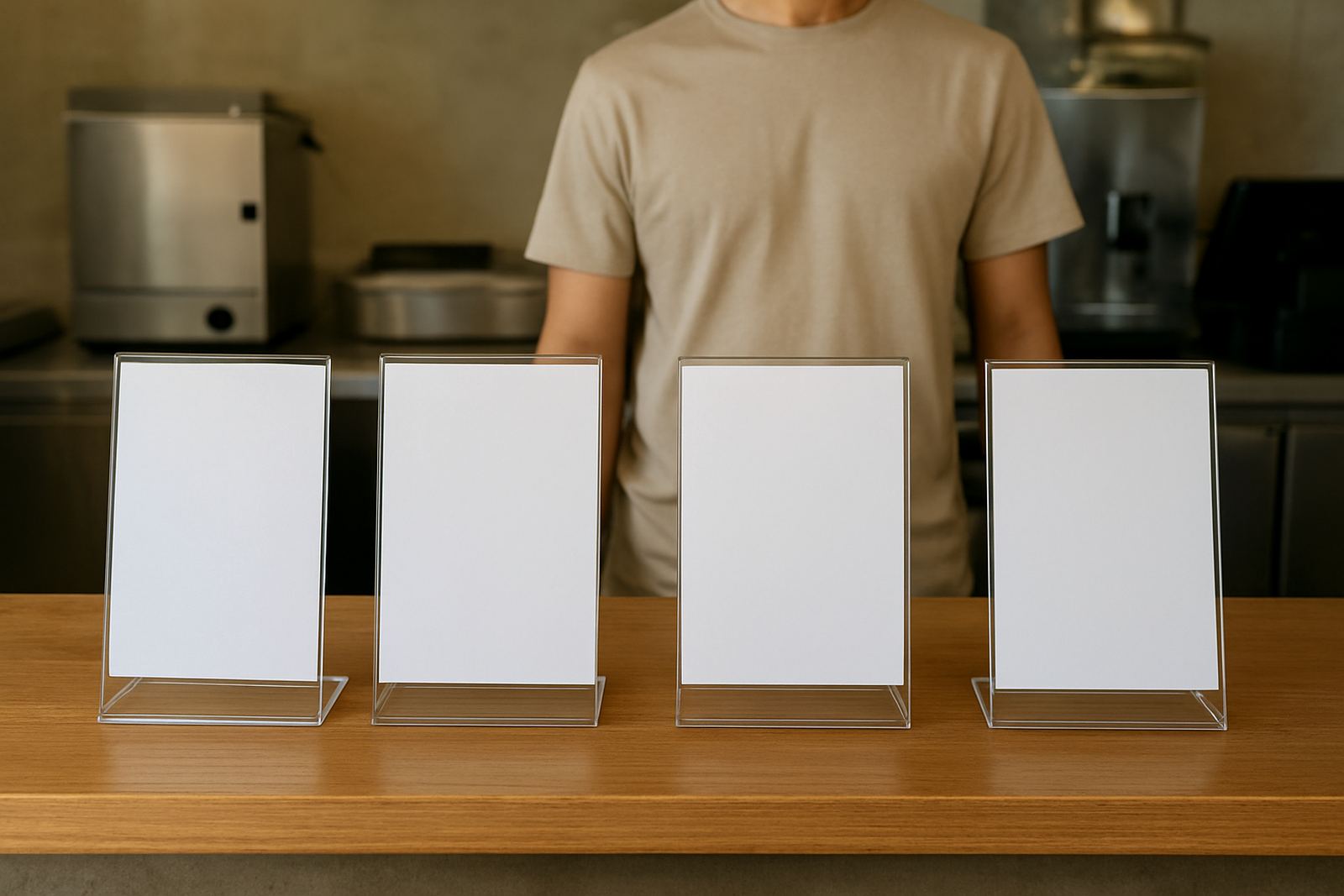
It also works well for insert-style covers where a printed menu sheet sits between two protective layers. You can keep the look neat without committing to a heavy bound cover, and when prices change you simply replace the paper insert. For venues with seasonal menus or tasting menus, that saves time and printing cost.
Typical set-up for a menu cover job
Most menu cover projects use clear sheet material cut to the final cover size, plus holes or slots where the cover will be fastened. Common thicknesses are 0.5 mm for light insert sleeves, 1 mm for standard covers, and 1.5 mm to 2 mm where you want a firmer feel or more handling resistance. We can cut single panels, matching pairs, and small batches for new openings or refreshes.
- Clear or lightly tinted PETG sheets for front and back panels
- Printed paper inserts sized to suit the finished cover
- Holes, corner radius cuts, or edge finishing where needed
- Binders, screws, clips, ribbons, or simple folded inserts depending on the format
- Courier packing for outlets outside Cape Town, or collection from Epping
If your team already uses a standard printer size, bring that measurement in early. A4, A5, long slim formats, and custom wine list sizes all need slightly different allowances for trimming and fastening.
Planning the layout before you cut
Good menu covers start with the inside page size, then the outer sheet is planned around it. Leave enough margin so the paper does not crowd the edges, and make sure the fastening points do not cover prices or dish names. If the menu is changing often, allow for a little extra space at the bottom so updated inserts still sit cleanly.
For venues that use specials sheets or tasting notes, it helps to agree on one master format first. That keeps every reprint aligned and saves staff from trimming paper by hand between services. We can assist with straight cuts, strip cutting, panel cutting and hole marking so the batch arrives ready for assembly, not just material in a box.
- Measure the finished printed insert, not only the paper size
- Allow a small border for handling and alignment
- Keep logos and headings away from punch points
- Decide whether the menu will open flat, fold once, or sit in a clip system
Common mistakes that cause rework
One common issue is choosing a sheet that is too thin for a busy service. It may look fine on the counter but feel flimsy after a week of handling. Another mistake is forgetting how the cover will be cleaned. A wipe-clean surface is useful only if the cleaning cloths and products used by the restaurant do not haze the material over time. This is worth checking before a full run.
We also see covers ordered without a final size check against the printed inserts. A few millimetres out can leave paper shifting around inside the sleeve, or make the cover look uneven once the team starts using it. If the menu will be used at outdoor seating, near kitchens, or in coastal air, ask for practical advice on thickness and edge finishing so the covers stay neat for longer.
Budget ranges for menu covers in Rand
Costs depend on size, thickness, quantity, and whether the job needs holes, deburring or special labelling. Small runs for a new opening or test menu usually sit in the lower budget range, while larger batches for multiple branches or hotels are priced more efficiently per sheet. Courier packing and nationwide delivery are also factored in when the order leaves Cape Town.
As a guide, simple cut-to-size PETG for menu covers can start from around R20 to R60 per cover equivalent on small quantities, depending on the format. Firmer sheets, custom hole marking, and more involved batch work can move into the R60 to R140 range per unit. Larger repeat orders often come down from there. If you have a target budget, send the size, quantity and finish required so we can advise properly, not guess.
Collection, courier and repeat ordering
Clients collect from Epping, or from nearby collection points including Montague Gardens, Bellville, Parow, Somerset West, Paarl, Stellenbosch and Claremont. For the rest of South Africa, we courier packed menu cover orders nationwide. That works well for franchises, guest farms, event venues and restaurants that need the same format delivered to several branches.
For repeat jobs, keep one reference sample or drawing on file. That makes it easier to reorder after a menu refresh, a branding change, or a change in price list layout. If you are planning for load-shedding backup printing or staggered menu updates across branches, the team can help keep the cut sizes consistent so everything assembles the same way.
- Save the final insert size and cover size separately
- Keep one approved sample for future reorders
- Specify whether you want film left on for extra surface protection
- Ask for job labelling if the order is going to several outlets
For advice, contact us through the enquiry form on the contact page and include your dimensions, quantity, and where the order needs to go.