When a workshop needs repeatable parts that hold up
Jigs and fixtures are there to keep work accurate, reduce handling time, and stop small errors from becoming scrap. In South African workshops that means something practical: a drilling guide that stays true after hundreds of cycles, a locating block that copes with daily use, or an assembly aid that does not crack when the pace picks up. PETG is often chosen for these jobs because it is tough enough for everyday handling, and it performs well in stores, fabrication bays and light production areas where heat, moisture and rough use are part of the day.
For Cape Town businesses, there is also the question of conditions. Coastal humidity, dust in industrial areas, and load-shedding all affect how tools are used and stored. PETG gives a sensible middle ground between easy processing and durability, which is why it works well for fixtures that must be made quickly, then adjusted later if the process changes.
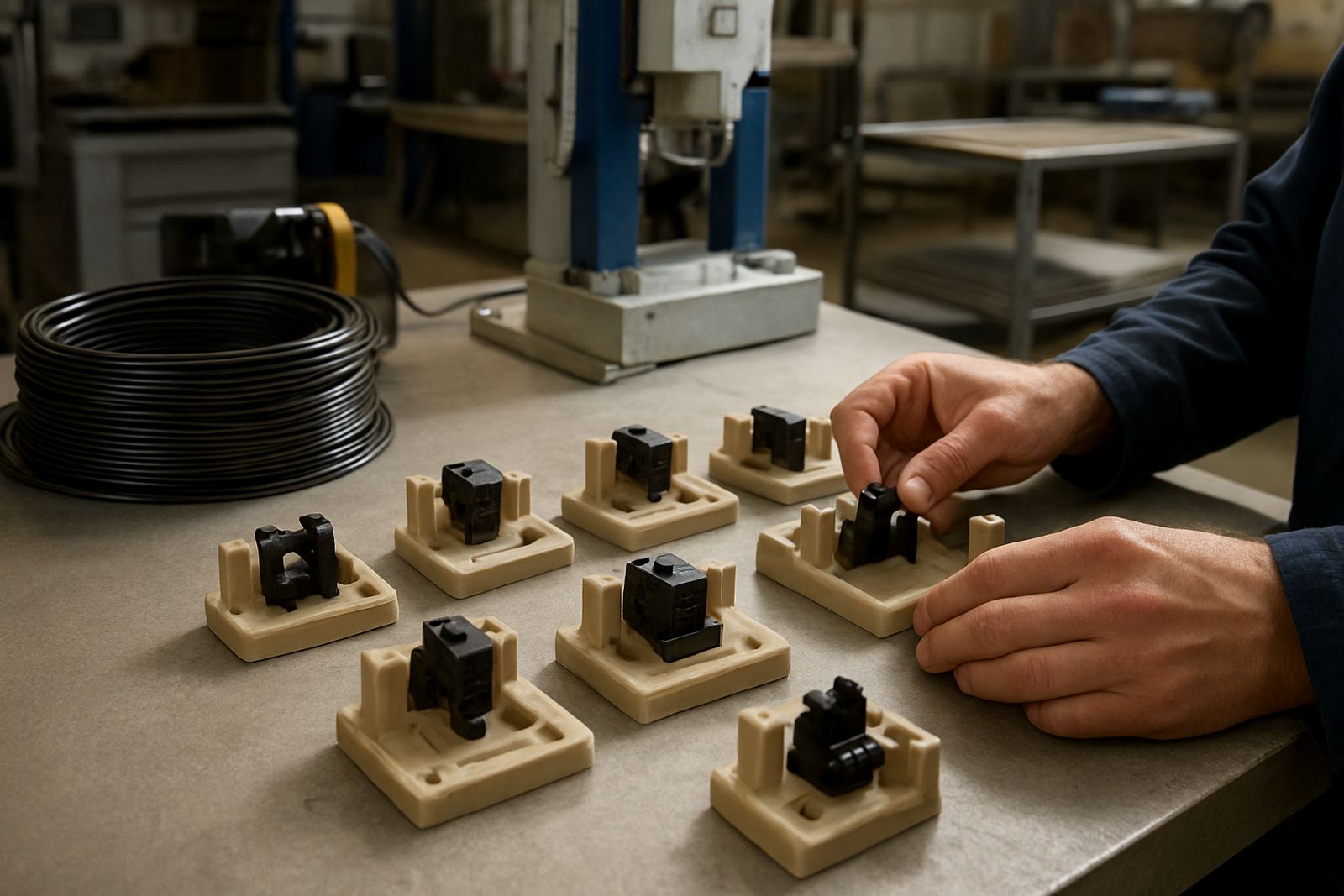
Typical jig and fixture applications for PETG
Customers usually ask for PETG when they need a part that is not disposable but also does not justify metal work for every small change. It is useful for short-run production, workshop set-ups, product assembly, and internal quality control. If a component needs to guide, locate, protect or space parts consistently, PETG is often the right starting point.
- Drill guides for repeat hole positioning
- Assembly nests for small parts and sub-assemblies
- Spacing blocks and set-up gauges
- Corner locators, stops and aligners
- Test fixtures for light inspection and checking
- Holding frames for spray, glue or trimming tasks
Where a team is doing frequent changeovers, PETG can be cut into smaller modules instead of one large fixture. That makes it easier to replace a worn section without remaking the full tool, which saves time and material.
Planning the layout before the first cut
A good jig starts with the process, not the shape. Before ordering material, it helps to note what the part must do, how often it will be used, and whether it will be handled with oily hands, gloves or bare hands. If the fixture is holding a part during drilling, the clearance around the drill point matters. If it is an assembly aid, the access path for fingers and tools matters more than looks.
We normally advise clients to think about thickness, fixing points and wear areas at the same time. A 3 mm or 4 mm sheet can work for simple guides and labels, while 6 mm or thicker is often better for fixtures that take more pressure or need more rigidity. For larger panels, adding ribs, returns or separate mounting strips can improve strength without overbuilding the whole item.
- Allow for operator access and easy release of the workpiece
- Keep holes, slots and stops simple to clean
- Mark fixing points clearly for repeat mounting
- Leave space for small adjustments after trial fitting
- Split bigger tools into sections if the machine bed or bench is limited
Cutting, labelling and batch work from Epping
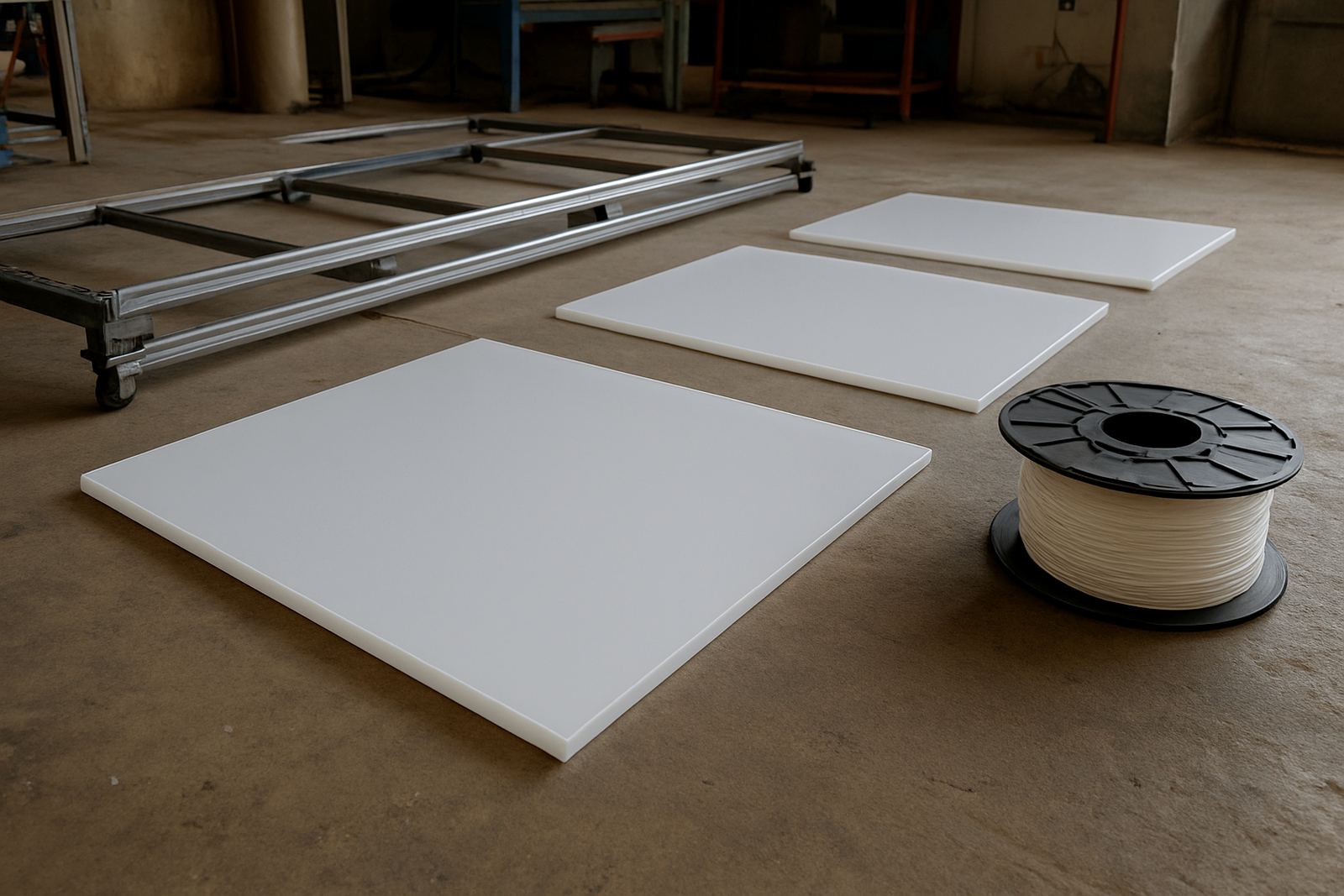
From our base in Epping, we handle straight cuts, panel cutting, strip cutting and small batch work for jigs and fixtures. That is useful when a client needs several identical parts for different stations, or one master template plus a few spares. We can also keep the film left on where required, which helps protect the surface during transport and fitting.
For production environments, neat job labelling is worth more than people expect. A fixture set with clear labels for station number, revision, or part reference is easier to manage, especially when a supervisor is handing it over to a shift team. Edge deburring and hole marking are also important because rough edges slow down fitting and can cause small injuries or inaccurate seating.
If you are collecting in Epping, Montague Gardens, Bellville, Parow, Somerset West, Paarl, Stellenbosch or Claremont, it helps to send one clear drawing or dimension list with your enquiry. That reduces back-and-forth and gives the cutting team a better shot at a first-time fit.
What usually goes wrong with workshop fixtures
The most common mistake is overcomplicating the jig. People often add too many features, then the tool becomes hard to use and awkward to clean. Another issue is choosing a sheet that is too thin for the job, especially where pressure is applied at one point or where the fixture is moved often. PETG is durable, but it still needs the right structure behind it.
Another problem is forgetting how the part will age. If the fixture is near heat, weld spatter, solvent splash or direct sunlight, the design should allow for a bit of movement and easier replacement. In humid coastal areas it is also worth keeping the fixture off damp benches and away from standing water, because the whole workshop tends to last longer when stored properly.
- Using a tight tolerance without testing the first sample
- Leaving sharp edges that catch on gloves or hoses
- Ignoring how the fixture will be clamped or moved
- Ordering one-off parts without a spare sheet or backup section
- Using a layout that cannot be cleaned between shifts
Budget ranges for small runs and larger jobs
Budget depends on thickness, cutting complexity, quantity and whether the job needs marking, deburring or courier packing. For a small simple jig made from sheet offcuts or a single cut part, clients may spend from about R150 to R500. A more involved fixture set with multiple pieces, hole marking and edge finishing can sit in the R600 to R2 000 range. Larger batch cutting or repeated production runs can move above that, depending on the number of parts and the material size.
For filament jobs, the cost is often driven by print volume rather than a single sheet cut. If a workshop is prototyping a fixture in stages, it can be sensible to start small, test the fit, then order the next batch once the process is settled. That approach keeps waste down and avoids sitting with a box of parts that need rework.
There is also value in planning for spares. A spare insert, stop block or locating piece usually costs far less than downtime when a fixture fails mid-shift.
How PETG helps once the fixture is in daily use
For day-to-day workshop use, PETG gives a practical balance of strength, ease of fabrication and clean finish. It is a good choice when a team wants a fixture that can be made locally, adjusted quickly and replaced without fuss. Many clients use it for internal tooling because it is easy to label, easy to store, and suitable for both one-off and small production environments.
If you are unsure whether your jig should be made from sheet or filament, send the dimensions, the task and a rough sketch through the enquiry form on our contact page. We can advise on material thickness, cut layout and whether a multi-piece setup will work better than one large panel.
For manufacturing, design studios and prototyping rooms, the main gain is simple: fewer mistakes, quicker setup and a cleaner handover between operators.