
Why PETG suits machine guards in local workshops
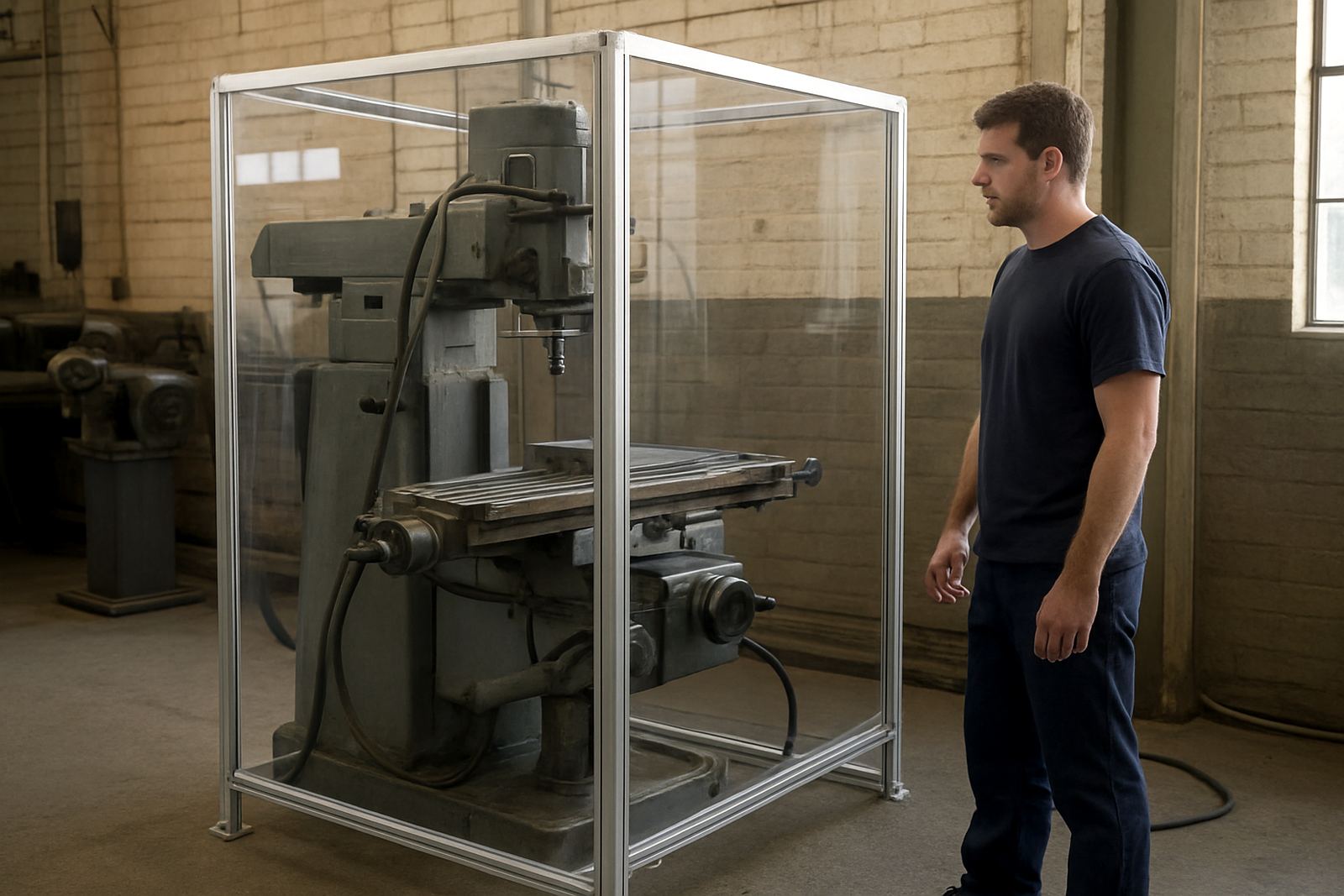
Machine guards need to do two jobs at once: keep people away from moving parts and still let them see what is happening inside the machine. Clear PETG sheet works well for that because it gives good visibility, is lighter than many glass options, and is easier to cut to the sizes needed on site. In Cape Town and across South Africa, that matters when a guard has to fit around a cutter, conveyor, packaging line or small fabrication unit.
For guards that face regular handling, PETG is often chosen where a cleaner finish and better impact resistance are needed than standard clear plastic. It is commonly used on covers for saws, routers, forming equipment, inspection windows and light-duty barrier panels. If the machine sits near a doorway, in a dusty workshop or in a coastal area with humidity, the material choice and edge finish both play a part in how long the guard stays neat and serviceable.
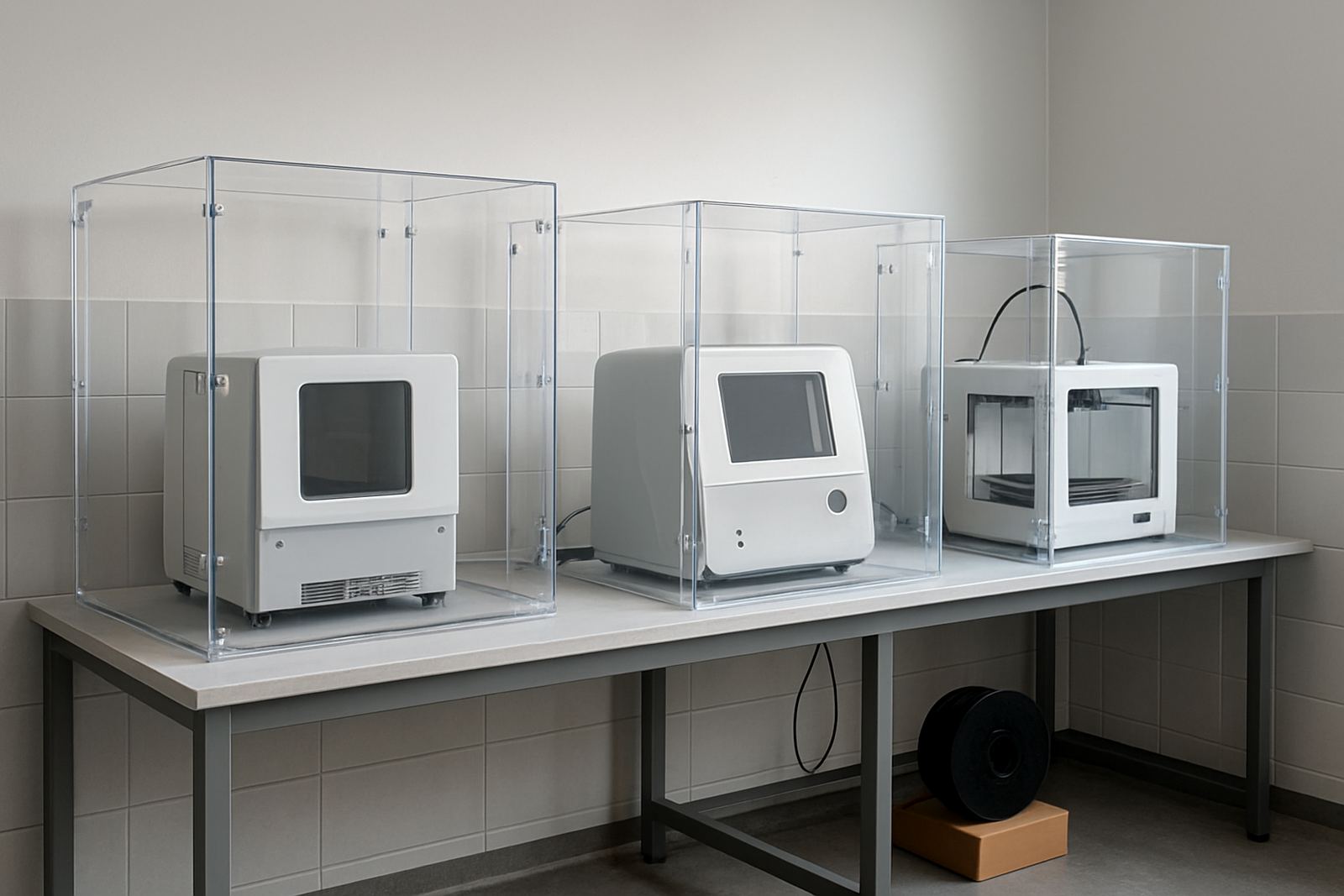
Typical equipment and guard layouts we cut for
Every machine setup is different, but the same basic planning questions come up again and again. What needs to stay visible, where are the access points, and how often will the guard be removed for cleaning or maintenance? A good guard should allow safe operation without forcing the team to work around awkward gaps or loose covers.
- Cutting machines and saw tables that need front or side shielding
- Packaging lines with clear covers over moving belts and rollers
- Small fabrication machines where chips or offcuts may fly out
- Inspection windows on enclosures and control bays
- Protective shields around test rigs, jigs and prototyping equipment
For many clients, the guard is made in more than one piece so the team can remove only the section they need. That approach helps with cleaning, tool access and maintenance, especially where a full panel would be too large or awkward to handle alone. We can also add hole marking for fixings, and film left on for clients who want extra surface protection during installation.
Planning the size, fixings and access points
Before cutting, it helps to think through the full layout rather than only the visible opening. Measure the clear area, then allow for brackets, stand-offs, hinges, edge trims and any overlap needed for safe mounting. A common mistake is to order a sheet to the exact opening size and then find there is no room for screws or clamps.
If the guard will be handled often, leave enough space for hands, tools and maintenance checks. In some plants, a removable panel with labelled fixings works better than a fixed panel. If the area gets regular cleaning, ask for smooth edges and deburred corners so there are fewer snag points for cloths, gloves or cable ties.
- Measure twice, then confirm the fixing method before cutting
- Allow extra space for brackets, washers and edge trims
- Plan where the operator needs line of sight
- Check if the panel must be lifted out, hinged or screwed in place
- Keep service access clear for belts, sensors and lubrication points
Common mistakes when ordering machine guards
One issue we see often is choosing the wrong thickness for the job. A thin sheet may be fine for a light cover but not for a panel that takes knocks from crates, tools or fast handling. Another mistake is ignoring heat, vibration or chemical exposure. If the guard sits near a warm process or an area that gets frequent washdowns, that should be considered before the final size is cut.
Clients also sometimes forget about the edges. A guard can look good on paper, but if the corners are sharp or the finish is rough, the panel may be unpleasant to fit and maintain. For long runs or repeat orders, it is worth labelling each piece clearly so the installation team knows which panel goes where. That saves time on site and reduces the chance of fitting the wrong part in the wrong position.
Budget ranges for machine guard projects
Small guard panels can start from about R250 to R650 per piece for simple cut-to-size work, depending on dimensions, thickness and the amount of handling required. Medium panels with hole marking, edge work and repeat cuts often fall in the R700 to R2 500 range. Larger custom guard sets, or jobs with multiple panels and careful layout matching, can run from R3 000 to R12 000 and up, especially when there are batch quantities or strict size tolerances.
For planning, it helps to budget for the full job rather than the sheet alone. That may include straight cuts, panel cutting, strip cutting, edge deburring, job labelling and courier packing if the order is going beyond Cape Town. If you are comparing options, ask what is included in the quote so there are no surprises when the panels are collected from Epping or sent out nationwide.
Cutting, collection and delivery from Epping
We work from Epping, Cape Town, with collection available for nearby areas like Montague Gardens, Bellville, Parow, Somerset West, Paarl, Stellenbosch and Claremont. For clients elsewhere in South Africa, filament is couriered nationwide and sheet orders can be packed for delivery where the job suits courier handling. For guard work, clear instructions help us keep the panels accurate: final sizes, hole positions, edge needs and whether film should stay on until fitting.
When ordering machine guards, the best results usually come from a simple drawing, a photo of the machine, or a marked-up sketch with dimensions. That lets us advise on material use, panel layout and the most practical cutting method. If the guard will be used in a busy workshop with load-shedding, humid coastal air or frequent cleaning, mention that too so the panel can be specified with real working conditions in mind.