
Start with what the part must do
Before you choose a sheet or filament, work out how the part will be used. A display panel for a shop front in Bellville has different needs from a machine guard in a workshop in Paarl, and both differ again from a vacuum formed prototype or a 3D printed bracket. Think about load, heat, visibility, impact and whether the part needs to be handled often.
If you are unsure, send the dimensions and use case through the enquiry form. We can help you narrow down the material format and thickness before you place the order, which saves time and reduces waste on the job.
- Will the part carry weight or just cover an opening?
- Does it need clarity, tint or full colour?
- Will it be cut, drilled, bent or printed?
- Is it going indoors, outdoors or near heat sources?
Choosing the right PETG sheet thickness
Thickness is one of the first choices to get right. A thin sheet may suit light covers, labels, guards and presentation work, while a thicker sheet is better for more demanding parts, structural panels and items that need better rigidity. In coastal areas like Somerset West and Stellenbosch, a thicker sheet can also help the part hold shape better over time when there is humidity and daily temperature change.
For general guidework, smaller panels often suit thinner material, while larger spans benefit from extra thickness. If the part will be cut to size, drilled or edge deburred, the right thickness can also make handling easier during production. We can advise on straight cuts, strip cutting, panel cutting and small batch jobs so the finished result matches the purpose.
- Light covers and displays: thinner sheet may be enough
- General fabrication and panels: medium thickness is often a practical choice
- Higher stiffness or bigger spans: thicker sheet is usually better
- Frequent handling: choose a grade that can take knocks and repeated use
Colour and clarity for the job at hand
Colour affects more than appearance. Clear sheet is useful where visibility matters, such as protective covers, display work and inspection windows. Opaque colours help hide wiring, backing plates or service areas, while tinted options can reduce glare and improve presentation. For design work and prototypes, colour can help separate parts in a build, especially when several items are being tested at once.
If you are matching an existing installation, ask for guidance on consistency across a batch. This is especially useful for retail fittings, signage components and production parts where the final look needs to stay uniform. When the job needs a neat finish, we can also keep the film on during cutting where suitable so the sheet arrives cleaner.
- Clear for visibility and inspection
- Opaque for coverage and a tidy finish
- Tinted for glare reduction or presentation
- Colour matched batches for consistent part sets
Sheet or filament: pick the format that fits the process
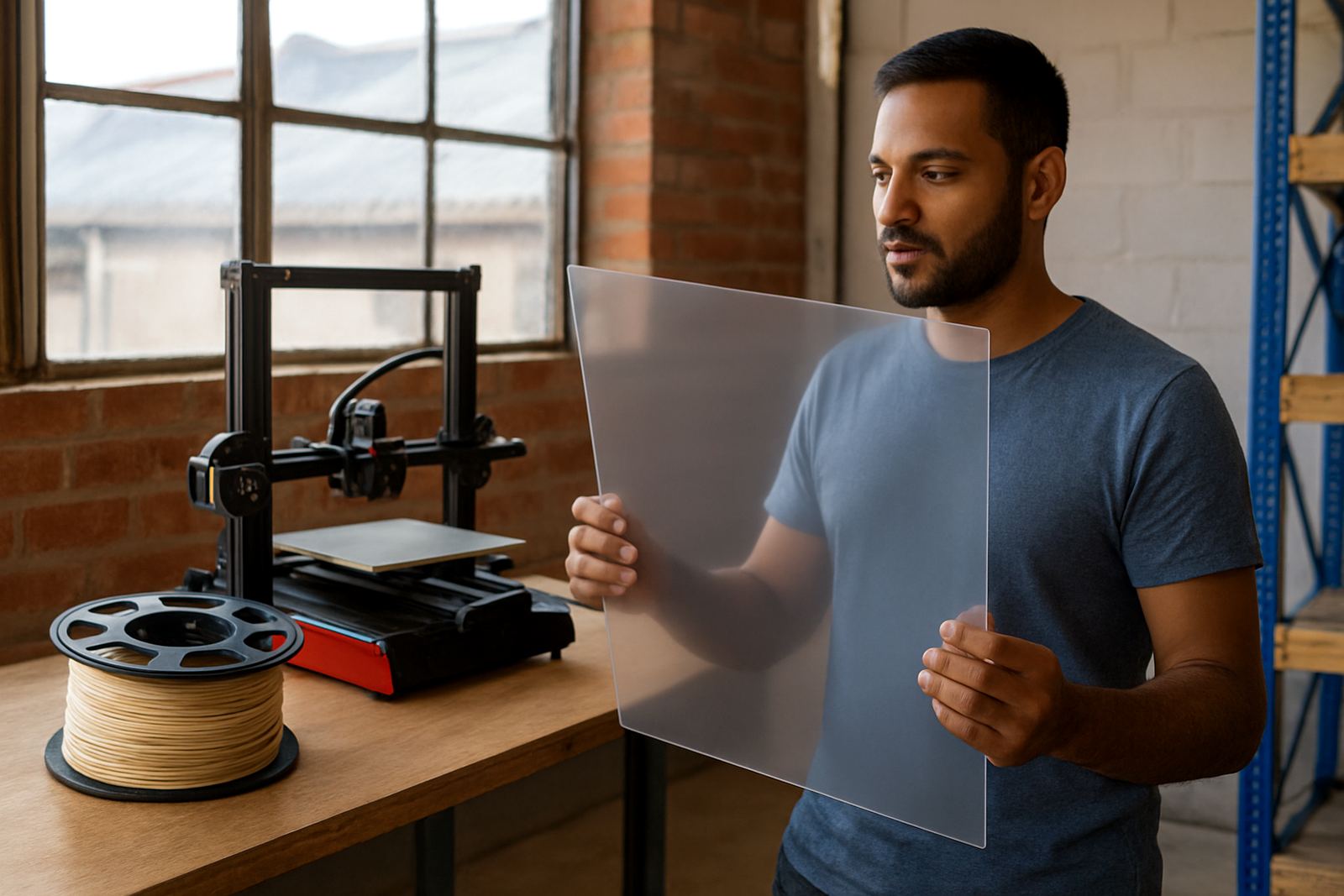
PETG sheet and PETG filament solve different problems. Sheet is the better choice for cutting, forming, guarding, panel work and fabrication jobs that start with flat stock. Filament is suited to 3D printing, model work, prototypes and functional parts that need to be built layer by layer. If your project moves between both methods, you may need a mix of formats for the same job.
For local customers collecting in Epping, Montague Gardens, Parow, Claremont, Bellville, Somerset West, Paarl or Stellenbosch, we can prepare sheet to the required size and label the job clearly. Filament is packed for courier delivery nationwide, which is handy when your team is working across sites or when load-shedding disrupts production schedules and you need stock ready to go.
- Sheet for flat parts, covers and fabricated panels
- Filament for printed prototypes and functional components
- Mixed format jobs when one project needs both methods
- Courier packing and job labelling for national dispatch
Think about cutting, drilling and finishing before you order
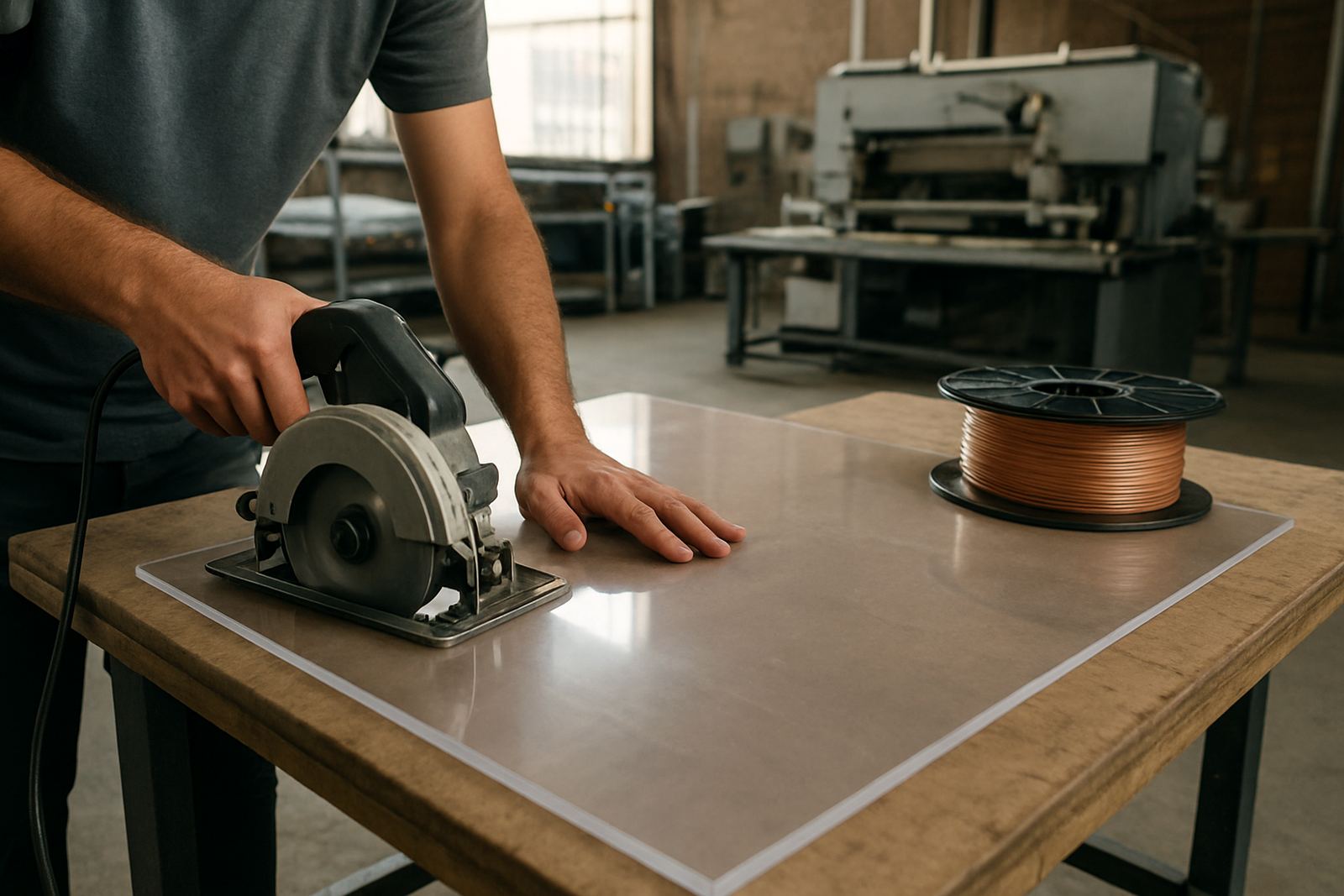
The way a part will be processed should guide the material choice. If you need holes marked, strip cutting, edge deburring or large batch cutting, allow for the tools and tolerances involved. Some jobs need extra margin for fixing holes, while others need tight sizing so the finished piece fits straight into an enclosure or frame.
For workshop use, ask for the cut list to be checked against the final fit. That matters on projects where the client has municipal constraints, fixed mounting points or limited access for installation. If the job is going out to a site in the Cape Town metro or beyond, make sure the measurements account for the actual conditions on the day, not just the drawing.
When to ask for material advice
Ask for advice when the job is new, the dimensions are tight, or the finish needs to be right first time. Our team in Epping can talk through the practical side of material selection, from thickness and colour through to cutting format and packing. Morne van Rensburg leads the business with the production and logistics team, so enquiries are handled by people who understand both the material and the end use.
Material advice is especially useful for:
- Prototype parts that may need revision after the first run
- Production panels with repeated sizing across multiple units
- Outdoor or high-touch parts that need better durability
- Orders that must be split between collection and courier delivery
Send your dimensions, quantity and intended use through the enquiry form, and we will help you choose a practical specification that suits the job and the budget.