
What PETG sheet panels are used for in the workshop
PETG sheet panels suit fabrication jobs that need a neat finish, consistent sizing and decent impact resistance without the fuss of more brittle sheet materials. In local workshops they are often used for machine guards, display faces, product covers, templates, splash guards, light-duty enclosures and internal panels where clarity or a clean surface matters.
They are popular with sign makers, fabricators, fitout teams and prototyping shops because the material can be cut, drilled and formed with normal workshop equipment. For many users, the real value is predictable handling. Once a job is set up, you can repeat the same cut plan across a batch and keep wastage down.
In Cape Town and along the coast, PETG also holds up well in humid conditions compared with some more brittle options. It is still a plastic sheet, so it needs proper handling and storage, but for everyday panel work it gives a useful balance of appearance and workability.
Standard sizes, thicknesses and cut-to-size options
We keep PETG sheet panels suited to standard fabrication use, then cut them to the sizes needed for your job. Common panel applications need repeatable dimensions, so the focus is on practical sheet sizes that fit into cutting plans, packing benches and workshop racks.
- Standard stock sheet sizes for regular fabrication and batch cutting
- Cut to size for single panels, sets and repeat production runs
- Strip cutting for narrower panel requirements
- Panel cutting for fitout parts and machine covers
- Film left on available where surface protection is needed during handling
Thickness selection depends on the application. Thinner sheet works for light panels, liners and presentation pieces, while thicker sheet is better when a part must stay flatter over a larger span or take more handling. If you are unsure, send the measurements and tell us how the panel will be fixed or used, then we can advise on the right option.
We also handle small batch cutting and larger batch jobs for regular workshop use. That helps when you need multiple panels for one site, one municipality, or one production run and dont want to trim everything on your own machines.
Where PETG panels suit best
PETG sheet panels are a good fit where a job needs clean edges, quick processing and a material that is straightforward to work with on site or in the shop. It is not the answer for every load bearing part, but it is a practical choice for many commercial and industrial uses.
Typical uses include workshop guards, interior panels, retail fittings, signage backings, display covers, prototype parts and light fabrication pieces. They are also useful for maintenance teams that need replacement panels in a hurry, especially when a site cannot wait for imported fittings or a special order from further afield.
For coastal properties and humid storage areas around Cape Town, Somerset West and the southern suburbs, PETG is often chosen because it is less fussy than some rigid alternatives. For jobs exposed to direct sun, heat or outdoor weather, check the full installation conditions first so the sheet is matched to the site and the fixing method.
- Manufacturing and maintenance workshops
- Design studios and prototype teams
- Retail and fitout work
- Light-duty protective panels and covers
- Replacement parts for repeated workshop use
Installation, fixing methods and power or gas needs
PETG sheet panels are installed as a mechanical or adhesive-fix material depending on the application. They do not need gas for installation. In a normal workshop, a good circular saw, jigsaw, router or scoring setup is often enough for cutting, while drilling and fastening can be done with standard fixings and care taken not to over-tighten.
If the panel is being fitted into a frame or around a machine opening, allow for movement and small tolerances. Like most plastics, PETG can shift slightly with temperature, so a tight fit that looks fine in the morning may bind later if the space is too exact. That matters in factories, containers and coastal sites where heat builds up during the day.
For jobs in areas with load-shedding, it helps to plan the cutting and drilling sequence before the power goes off. If you are collecting panels for site work in Bellville, Parow or Montague Gardens, make sure the dimensions are checked before the job is loaded. A good label on each panel saves time when the team is assembling after-hours or on a busy shift.
- No gas requirement for normal installation
- Standard workshop cutting tools usually suffice
- Allow movement for thermal expansion
- Use suitable fixings and avoid over-tightening
- Plan work around load-shedding where power tools are involved
Care, cleaning and storage on site
PETG sheet panels are simple to care for if they are handled properly. Wipe them with a soft cloth and a mild cleaner, then dry the surface rather than letting grime sit on it. Avoid harsh solvents and abrasive pads because they can dull the finish or leave fine marks.
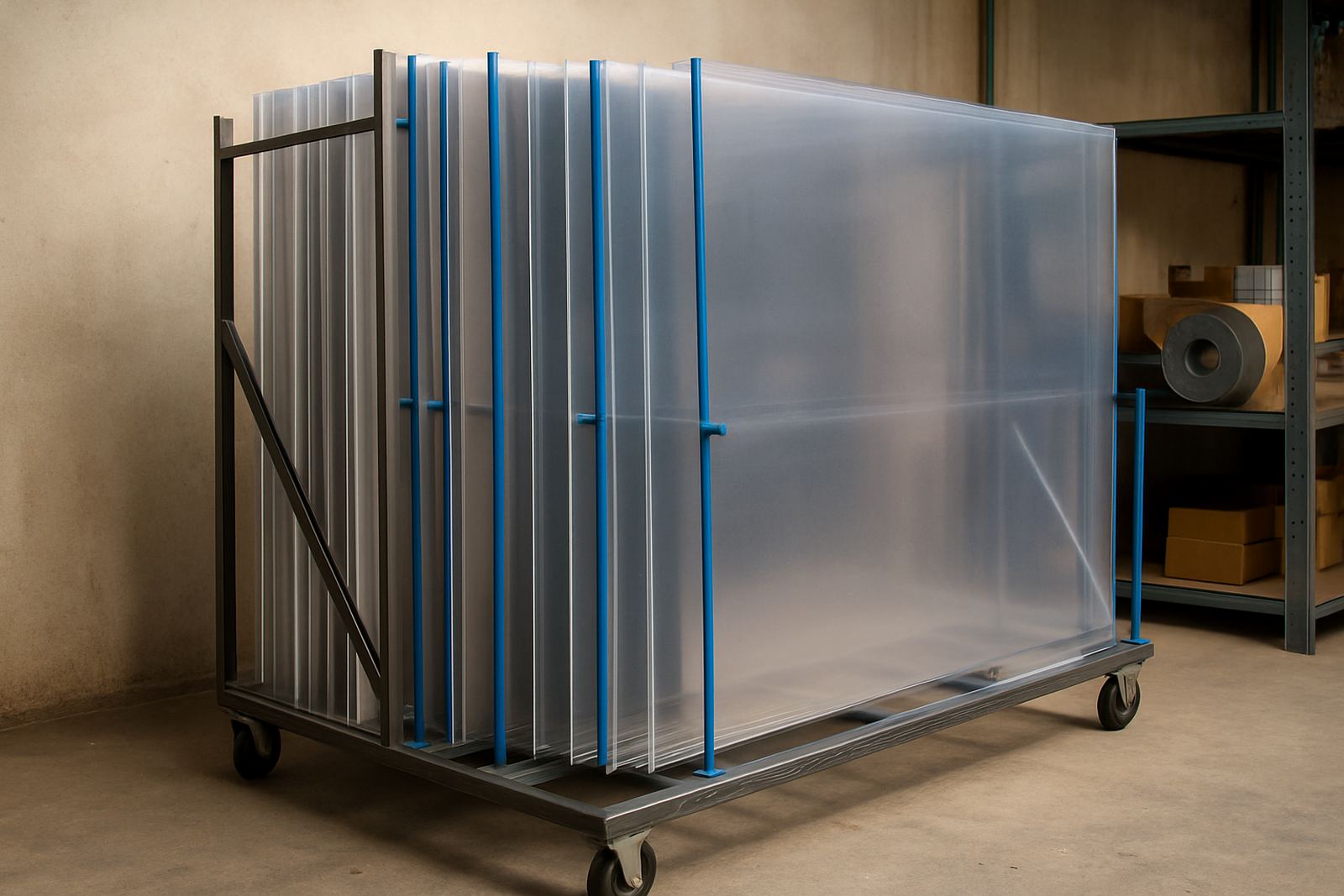
For workshop storage, keep panels flat on a clean surface where possible. If sheets are stored upright for too long, they can pick up a slight bow, especially in warm rooms or near open loading areas. In dusty industrial zones, keep the film on until the panel is ready for fitting, then remove it just before installation.
If a panel is used in a site with regular cleaning, such as a production area or shared workspace, inspect the corners and fixing points from time to time. A loose fixing or a chipped edge is easier to deal with early than after the panel has started moving under vibration.
What to check before placing an order
Before ordering PETG sheet panels, check the finished size, thickness and whether you need any trimming allowance. If the panel must fit into a frame, under a lip or around a machine opening, give the exact opening size and note whether you want a tight fit or clearance. That reduces the chance of back-and-forth later.
Also confirm the surface condition you want on delivery. Some jobs need film left on for protection during transport, while others need the sheet fully ready for fitting. If the panel is going by courier to Stellenbosch, Paarl, Claremont or further inland, mention how it will be used so we can pack it for the trip.
Helpful details to include with your enquiry:
- Overall panel size and quantity
- Thickness required
- Whether straight cuts, hole marking or deburring are needed
- Whether the film should stay on during transport
- Collection point or courier destination
- Any site limits, such as narrow access, heat, or coastal exposure
For repeat orders, it helps to keep the same cut plan on file so future batches come out the same. That is useful for regular workshop production, municipal work and maintenance jobs where the panels must match across several sites.
Key facts
| Product type | PETG sheet panels for fabrication, covers and workshop use |
|---|---|
| Supply format | Standard stock sheets and cut-to-size panels |
| Common processing | Straight cuts, custom sizing, strip cutting, panel cutting and hole marking |
| Finish options | Film left on available, edge deburring where required |
| Collection and delivery | Epping collection with nationwide courier on suitable orders |
| Typical use sites | Manufacturing, design, prototyping, fitout and maintenance workshops |