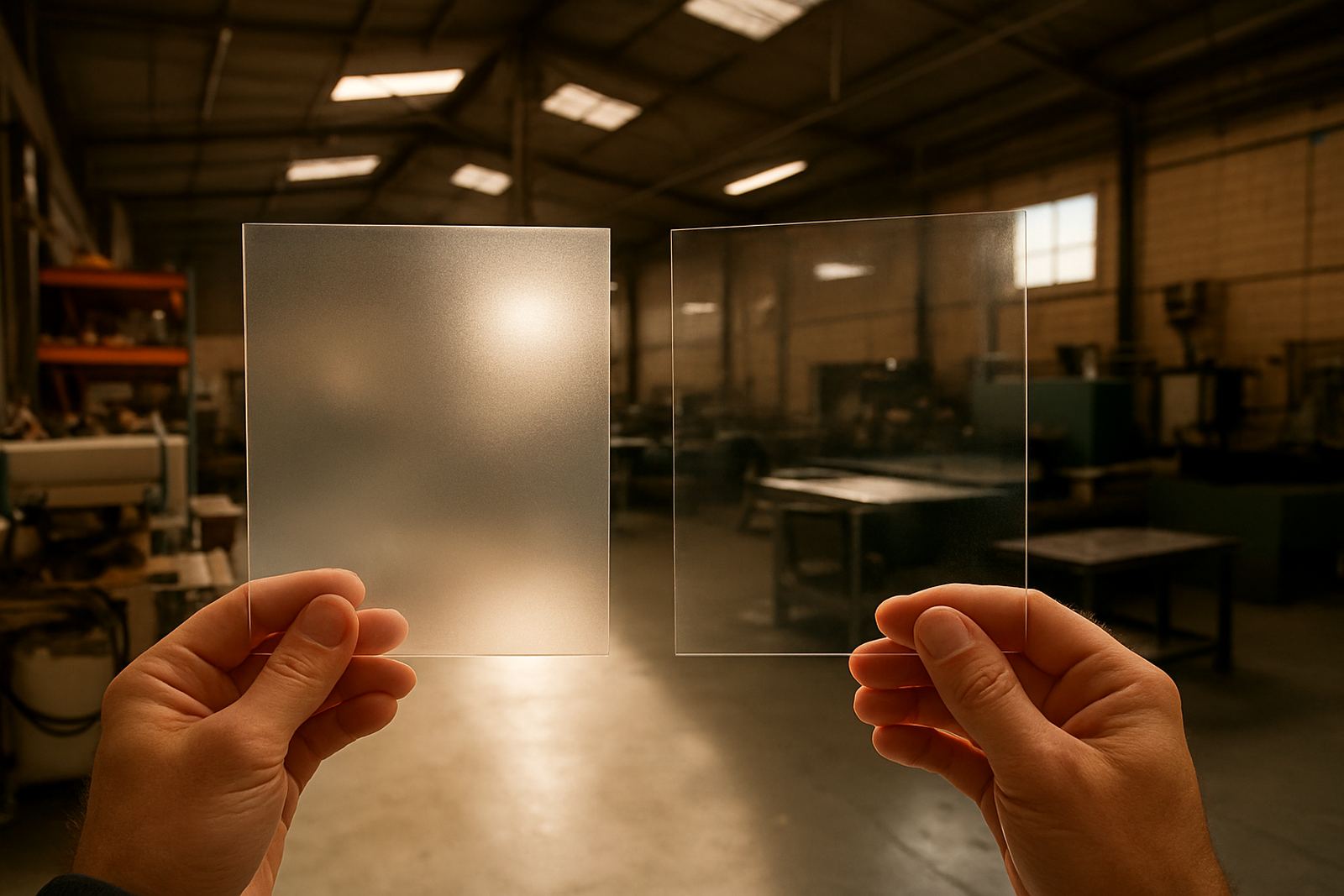
When PETG is the better everyday choice
PETG is often the practical option when you need a clear sheet that is easy to cut, form and finish without a lot of fuss. It works well for display covers, machine guards, sample trays, point-of-sale parts and general fabrication jobs where clarity and neat edges matter more than high heat resistance.
For many local workshops in Cape Town, Durban or Gqeberha, PETG makes sense because it is simpler to work with on small runs. It is kinder on cutting tools, accepts drilling and trimming more easily, and is a good fit for projects where the sheet must be cut to size and fitted quickly. If you are dealing with load-shedding and need to finish jobs in short windows, that lower handling stress can save time.
- Good optical clarity for displays and covers
- Easy to cut, mark and drill for batch work
- Suitable for indoor use and moderate wear
- Useful where a cleaner finish is needed after cutting
Where polycarbonate earns its higher price
Polycarbonate is the heavier-duty option. It is chosen where impact resistance matters more than ease of handling, such as machine protection, safety screens, security enclosures and parts exposed to rough treatment. If a panel may be struck, bumped or flexed often, polycarbonate is usually the safer material to consider.
It is also used where the application needs a tougher sheet that can take abuse in plant rooms, factory areas and public-facing installations. The trade-off is that it is usually harder to machine neatly, it can scratch more easily in handling and it often costs more than PETG. For a contractor in Somerset West fitting clear guarding on a busy production line, that extra strength can be worth it.
- Higher impact resistance for demanding environments
- Better choice for safety-related clear barriers
- Handles rough service better than PETG
- Usually more expensive and less forgiving to process
Heat, sunlight and South African site conditions
Heat is one of the main reasons buyers move from PETG to polycarbonate. PETG handles normal indoor temperatures well, but if the sheet sits near warm machinery, lights or sun-exposed areas, polycarbonate may be the better fit. In a Cape Town factory with windows facing strong afternoon sun, the ambient heat can matter more than people expect.
Coastal humidity also plays a part. Both materials are used across the coast, but the supporting structure, fixings and storage conditions must be considered too. If sheets are left in damp areas, or parked near open doors in Epping or Montague Gardens, careful handling and packaging help reduce marks and contamination. For outdoor or semi-outdoor use, always check the expected temperature range and the type of stress on the part before choosing.
- Polycarbonate is usually preferred when heat is a concern
- PETG suits many indoor applications and lighter-duty covers
- Check exposure to sun, machinery heat and moisture
- Allow for local storage and transport conditions
Cutting, drilling and finish: what fabricators should know
If the job needs multiple cut pieces, PETG is usually easier to work with in a small fabrication shop. It cuts cleanly, is more forgiving on scoring and trimming, and often needs less post-processing. That helps when sheets are being cut to size for branches, retail fitouts or prototyping runs with tight turnaround.
Polycarbonate can still be cut and drilled, but it asks for more care. The sheet is tougher, so tooling, feed rate and support all matter. A rushed cut can leave rough edges or stress near holes. For jobs that need hole marking, strip cutting or panel cutting, it helps to plan the sequence before the sheet reaches the saw. That is especially true when a batch has to be couriered nationwide after cutting.
- PETG is easier for neat finishing on routine jobs
- Polycarbonate needs better tool control and handling
- Hole marking should be set out before cutting starts
- Film left on can help reduce handling marks during processing
Typical uses by industry and job type
In manufacturing, polycarbonate is often picked for clear guards, inspection shields and areas where impact or wear is part of daily use. PETG is often used for product covers, light-duty forming work, sample holders and display components where the part must look tidy but does not need heavy protection.
In design and prototyping, PETG is a strong first choice because it is fast to work with and usually more cost-friendly for one-off or small batch work. A designer in Stellenbosch might use PETG for a mock-up enclosure, while a production team in Bellville may choose polycarbonate for the final part if the same shape must survive repeated knocks. The shape may stay the same, but the duty level changes the material choice.
- Manufacturing: guards, shields, covers and enclosures
- Design: presentation pieces, prototypes and display parts
- Retail: clear protection, stands and sign components
- Engineering: test parts, panels and working covers
A local example: choosing the right sheet for a Cape Town workshop
Imagine a small workshop in Epping making clear covers for a line of compact machines. The covers need to be cut to size, labelled, packed and sent to branches in Parow, Claremont and Somerset West. If the cover is there mainly to keep dust off and show the part beneath, PETG is usually the sensible option. It is easier to process in batches and keeps the job moving.
If the same workshop is building a barrier for a machine with moving parts, where knocks from tools or components are common, polycarbonate becomes the stronger candidate. The extra cost can be justified by better impact resistance and fewer replacements later. For many buyers the real question is not which material is better overall, but which one is better for this exact job and site.
That is why material advice matters. A clear sheet is not just a clear sheet, and the wrong choice can mean warped panels, cracked holes or premature replacement. The best result usually comes from matching the sheet to the duty, the site and the way it will be cut, packed and installed.