
Project brief from a Goodwood fabrication workshop
This job came from a local fabrication customer in Goodwood, Cape Town, working on a set of illuminated sign faces for a retail and service fit-out. The brief was straightforward on paper but tight in practice: get a clean white opal face material that would diffuse light evenly, keep the sizes consistent across multiple boxes, and make sure the parts arrived ready for install without extra trimming on site.
The customer was working to a handover date set by the main contractor, so the schedule mattered. The signs were going into a busy commercial area where the final install window was short and the site team did not want to spend time adjusting panels with a heat gun or router on a ladder. They needed a supplier who could cut accurately, label each piece properly and keep the job moving in a single run.
What the sign faces had to handle
For illuminated signage, the face material has to do more than just look neat. It needs to spread light evenly, stay flat after cutting and tolerate the day to day conditions of Cape Town installations, including sun exposure, wind and coastal humidity. In this case, the client wanted a material that would stay presentable on a building frontage and not show rough edges once the lights came on at night.
The key constraints were:
- Opal finish for consistent light diffusion behind LED modules
- Exact sizing to match the fabricated sign boxes
- Clean edges that would not snag during fitting
- Marked fixing points so the installer could move quickly on site
- Packaged by sign set so nothing got mixed up in transit
There was also a practical consideration around handling. The panels were going out into a commercial install where parts can get shifted around, stacked and checked more than once. So the cut quality and labelling had to stand up to a bit of movement, not just look good on the collection table. That matters more than people think, especially when there are several faces on one order and a crew working under pressure.
Sheet selection, cutting and finishing in Epping
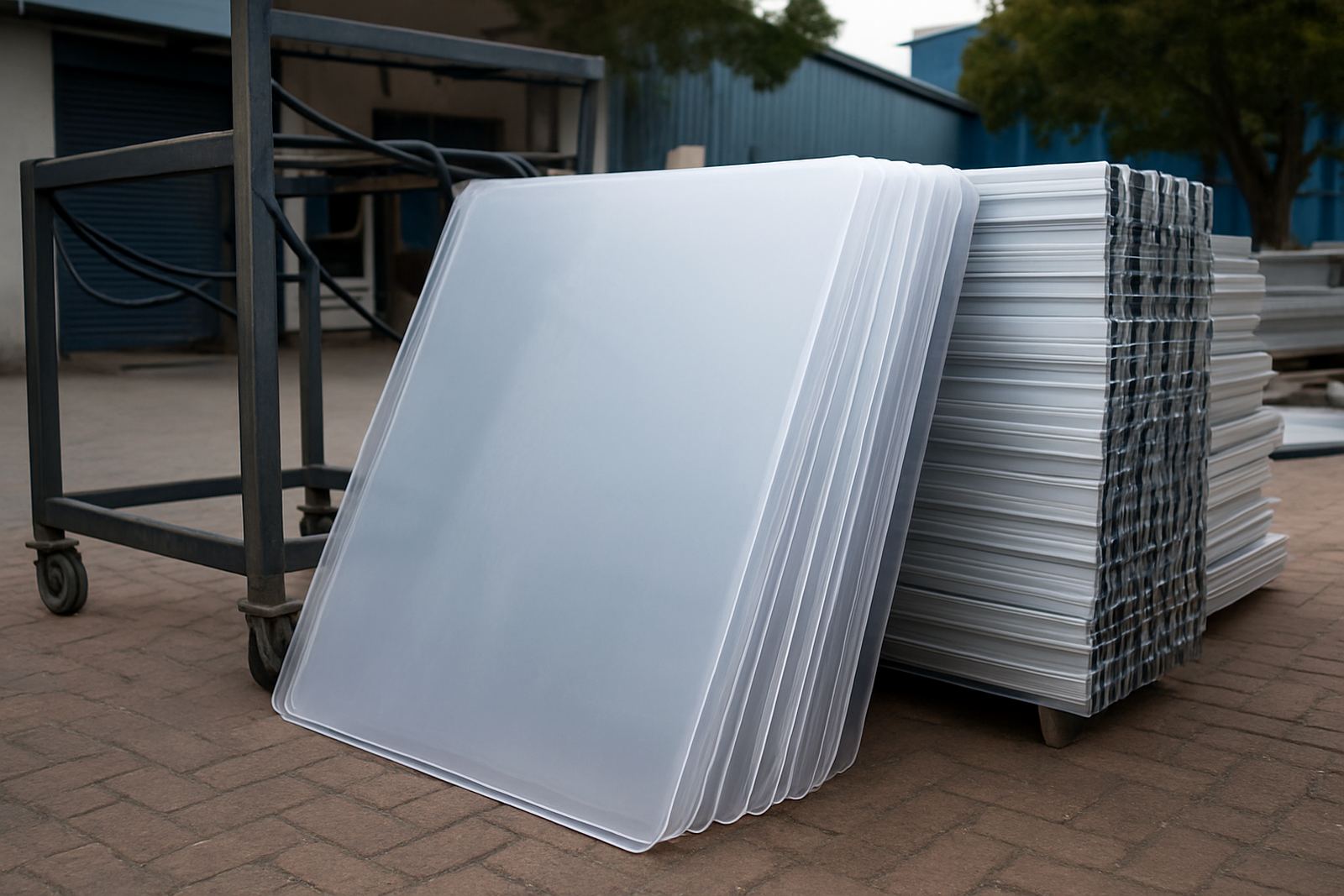
We supplied opal PETG sheet from our Epping base and cut the faces to the customer’s sizes. The order included straight cuts and panel cutting, with hole marking on selected pieces to suit the fixing pattern used by the fabricator. Where the client asked for it, we left the protective film on to help keep the faces clean during transport and installation.
Because the signs were being fitted into illuminated boxes, the cut edges had to be neat and consistent. We also checked each piece for the kind of small defects that can slow a job down later, such as burrs or uneven corners. The production team labelled each set so the installer could match the correct face to the correct box without guessing.
- Material: opal PETG sheet
- Processing: straight cuts, panel cutting and hole marking
- Finish: film left on where requested
- Pack-out: grouped and labelled per sign set
- Collection point: Epping, Cape Town
Working to the install date without adding extra site work
The client’s main concern was avoiding rework on the installation day. When a sign face arrives slightly oversize, the whole job slows down. When holes are off by even a few millimetres, crews end up redrilling on site. We kept the process tidy from the start by confirming the panel sizes, fixing positions and the number of units before cutting began.
The turnaround ran over a few working days, with the full job completed in under two weeks from approval to ready-for-collection status. That gave the workshop time to mount, test and seal the boxes before the fit-out crew arrived. It also meant the customer could keep the project moving even with load-shedding and other day-to-day delays in the background, which most local workshops have to plan around anyway.
For a sign maker, time saved at the end often matters more than time saved at the start. A well cut face sheet means fewer adjustments, less scrap and a cleaner final result. In this case the client could move straight into installation without doing an extra round of trimming or edge clean-up.
Why opal PETG suited this signage job
Opal PETG is a practical choice for illuminated sign faces where the installer wants a good balance of appearance, workability and durability. It gives a clean diffused look behind LEDs and handles fabrication well for the kind of cuts and hole marking needed in shopfront work. It is also a sensible option where the sign face may be exposed to changing temperatures, coastal air or regular handling during maintenance.
Compared with a last-minute substitute from a general hardware counter, cut-to-size PETG gives the fabricator more control over the finish. That control matters on commercial work because once the sign is mounted, the face becomes part of the building frontage. If the cut is neat and the surface is protected during transit, the result looks sharper and lasts better through daily use.
- Even light diffusion for illuminated boxes
- Easy to cut and finish for fabrication work
- Suitable for repeated handling during installs
- Useful for both one-off signs and small batch runs
What we would repeat on the next run
If we were doing this job again, we would keep the same basic approach: confirm the box dimensions early, mark the fixing points before cutting, and label every face clearly for the install team. That workflow keeps the order simple to manage and avoids confusion when multiple sign faces are being handled at once.
We would also continue to separate the job into clean batches if the client had signs for more than one elevation or tenant unit. It makes courier packing easier, and it reduces the chance of parts being mixed together. That is especially useful for customers working between Goodwood, Bellville, Parow and the rest of the northern suburbs where collections and site runs often happen on the same day.
In short, the project did what it needed to do: give the fabrication team accurate opal PETG sign faces that were ready for installation, without extra cutting on site or avoidable delays. The result was tidy, consistent and practical for a working sign shop. Nothing flashy, just the right material cut properly and delivered in the order the installer needed it.
Key facts
| Project type | Illuminated sign faces for commercial fabrication |
|---|---|
| Location | Goodwood, Cape Town |
| Material | Opal PETG sheet |
| Processing | Straight cuts, panel cutting, hole marking, film left on |
| Turnaround | Completed in under 2 weeks |
| Supply method | Cut to size at Epping with collection or courier support |