
Project brief from a working plant in Epping
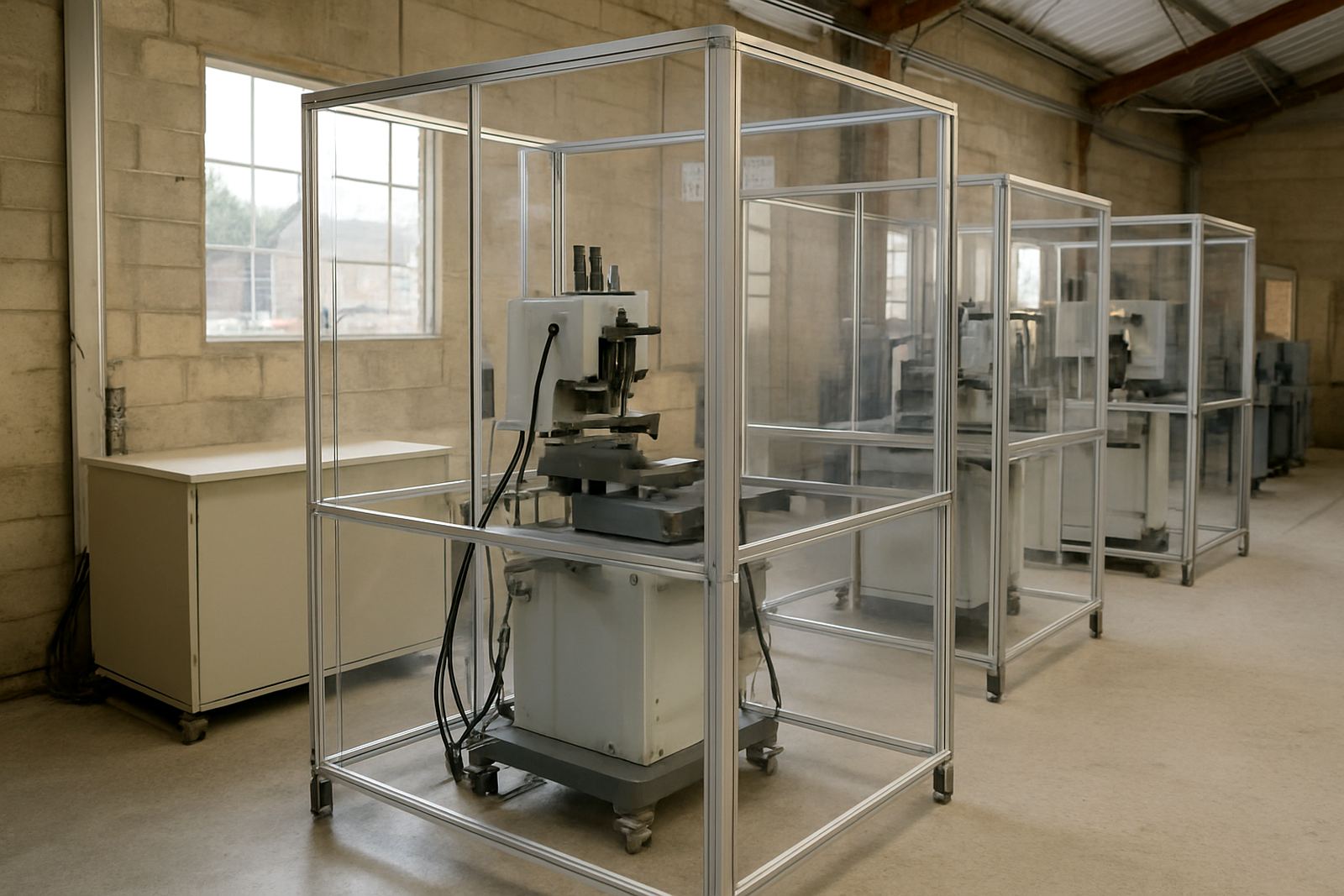
The client needed replacement machine guards for a light industrial line in Epping, Cape Town. The original covers had gone cloudy and brittle, so the safety team wanted clear PETG panels that would let operators keep sight lines on the machinery while restoring proper protection.
The brief was practical: match the existing guard openings, keep the panels light enough for easy handling, and supply them ready for fixing on site. The guards had to suit a busy plant where dust, daily cleaning and repeated opening and closing are part of the routine. No decorative finish was needed, just clean fitment and dependable material.
Constraints on site and what had to be worked around
Because the machine frames were already installed, there was little room for trial and error. We had to work from measurements taken against the existing openings and allow for fixing points, edge clearance and a bit of movement in the frame. The panels also needed enough thickness to stay rigid without adding unnecessary weight.
Another point was visibility. The guards had to remain clear in normal plant light, and they needed to handle regular wiping down without turning hazy too quickly. In a Cape Town industrial setting, that matters. Dust from nearby processes, temperature changes and everyday handling can all show up on the material if the wrong sheet is used.
- Replacement guards for an existing machine frame
- Clear PETG for visibility and day to day inspection
- Allowance made for fixing holes and panel clearance
- Suitable for cleaning in a busy light industrial environment
What we supplied and how we cut it
We supplied clear PETG sheet cut to the required sizes, with straight cuts, hole marking and edge finishing where needed. The panels were prepared to match the frame dimensions and supplied in a way that made installation simpler for the maintenance team. Where the job called for a neat fit around brackets and fasteners, we kept the cuts true and the layouts consistent.
For this type of work, the detail is in the prep. Each panel was labelled so the correct piece could go to the correct opening, which reduced confusion during fitment. We also left the film on the faces that needed protection during handling, then deburred the edges so the panels could be handled safely. It saves time on site and helps avoid scratches before the guards are even installed.
- Clear PETG sheet supplied for all replacement panels
- Straight cuts and custom sizing to the measured openings
- Hole marking for fixing positions
- Edge deburring to reduce sharpness after cutting
- Job labelling for easier installation on site
Timeline, coordination and delivery
The project ran over about two weeks from final measurements to supply. Once the sizes were confirmed, production and cutting were scheduled around the other work in our Epping operation, with the order kept moving so the client could plan its maintenance window properly. That sort of coordination matters when a plant does not want a guard change stretching into a second shift.
Because the site is in Epping, collection was possible, but the client chose to have the panels prepared and ready for the maintenance team. For other branches and areas, we also courier sheet and cut parts nationwide, which helps when the site is not close to Cape Town. On jobs like this, good packing and clear labels are just as important as the cut itself.
- Estimated turnaround: 2 weeks
- Prepared in Epping, Cape Town
- Collection or courier can be arranged depending on site needs
- Panels packed to reduce rubbing and transit scuffing
Result on the floor and what changed
Once fitted, the new guards restored clear visibility over the machinery and gave the maintenance team a cleaner, more practical replacement than the worn parts they were working with before. The panels sat properly in the frames and did not need extra trimming on site, which kept the install straightforward.
The client also gained a repeatable pattern for future replacements. That is often the best outcome on a job like this: when one panel gets damaged or cloudy later on, the team already knows the size, fixing positions and finish required. It reduces downtime and makes the next order much easier to place.
What we would do again on a similar guard job
If we were doing the same job again, we would keep the same approach: confirm the frame measurements carefully, label each part clearly, and allow for a little tolerance where the panel meets the housing. For machine guards, a few extra minutes in the measuring stage can save a lot of time at fitment.
We would also keep the material advice simple and site-specific. For indoor industrial use in Cape Town, clear PETG works well where visibility matters and the panel needs to be handled regularly. For coastal humidity or areas with more cleaning, it is worth discussing thickness, edge finish and the fixing method before cutting starts. That is the part that keeps the job practical instead of fussy.
- Recheck hole centres before cutting
- Keep spare labels with each panel set
- Confirm thickness against the existing guard hardware
- Plan for site handling so panels do not get scratched in transit
Key facts
| Project | Replacement machine guards |
|---|---|
| Location | Epping, Cape Town |
| Material | Clear PETG sheet |
| Cutting | Straight cuts, custom sizing, hole marking |
| Finish | Edge deburring, film left on where required |
| Timeline | About 2 weeks |