
What white PETG filament is used for in local print shops
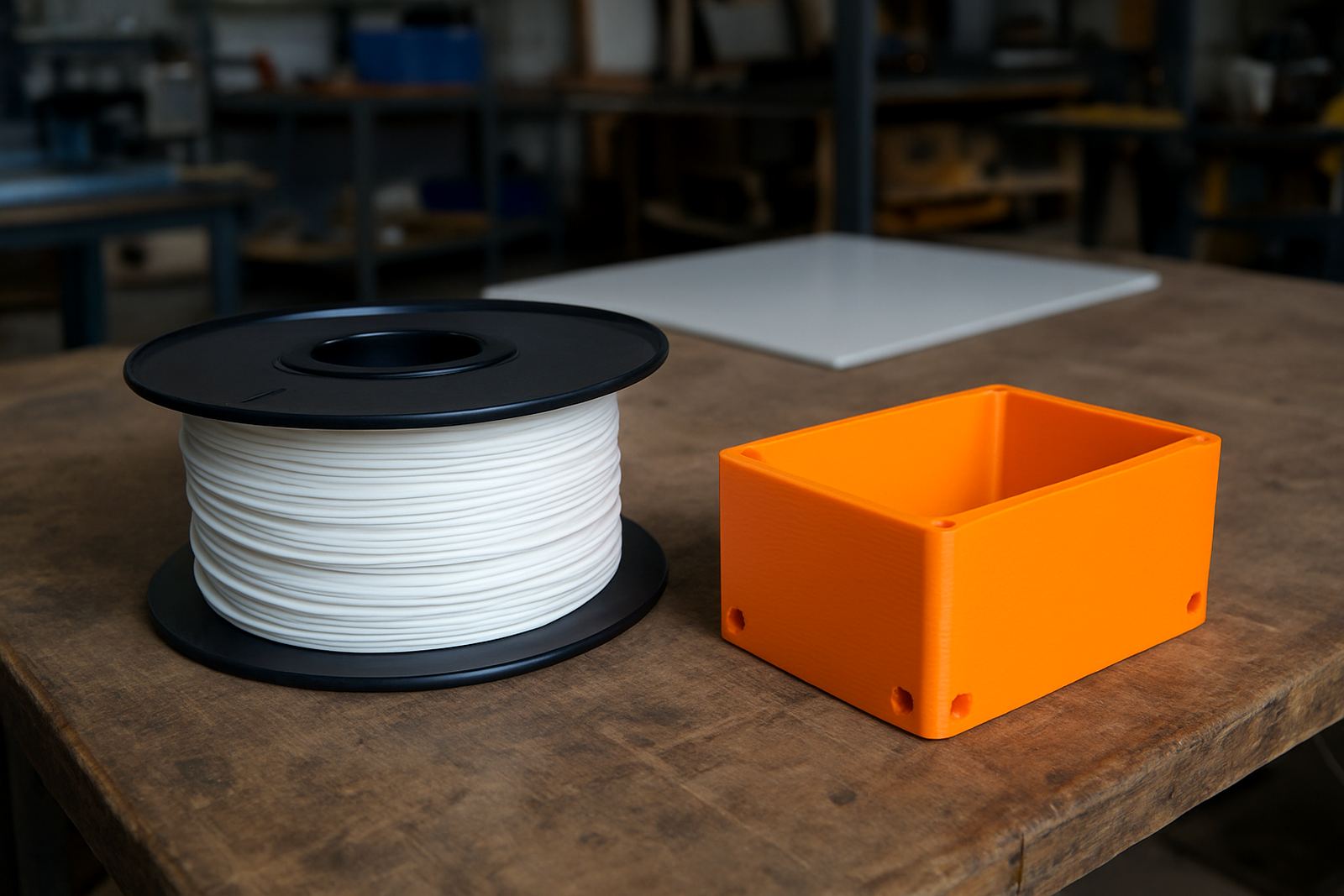
White PETG is a thermoplastic filament used on FDM style 3D printers for parts that need to look clean and hold up to day to day use. It prints with a smoother, less brittle feel than many general purpose materials, which is why it is often chosen for product samples, covers, brackets, test assemblies and presentation pieces that must look presentable straight off the machine.
For South African makers, workshops and small manufacturers, white is useful because it shows surface detail well and takes light sanding, vapour free finishing and minor post processing without fuss. It also suits parts that may sit in warm rooms, near windows or inside equipment housings where basic materials can soften too easily. If you are printing a run of functional items, white helps with inspection because layer lines, hole edges and fit issues are easier to see.
Sizes, spool options and print settings to plan for
White PETG filament is commonly supplied on standard spools for benchtop and workshop printers. The most widely used diameter is 1.75 mm, while some machines call for 2.85 mm or 3.00 mm. When ordering, confirm the size your printer actually feeds, because the wrong diameter will cause poor extrusion or a complete jam.
- Diameter: 1.75 mm or 2.85 mm, depending on your printer
- Colour: solid white, suitable for visible parts and display models
- Spool format: standard wound spool for direct loading
- Typical nozzle temp: 230 C to 250 C
- Typical bed temp: 70 C to 90 C
- Print speed: moderate, usually 30 mm/s to 60 mm/s for cleaner results
White pigment can make flow a little less forgiving than darker materials, so it helps to keep your extrusion settings steady and your filament dry. If your print room gets humid, especially along the coast from Epping to Somerset West or down towards Stellenbosch, store the spool in a sealed tub with desiccant. That small step saves time and reduces stringing, bubbles and rough surfaces.
Where white PETG suits best, from prototypes to housings
White PETG is a good fit for parts that need both a professional appearance and everyday durability. It is often used for prototype enclosures, mounting covers, machine guards, display items, architectural mock ups, signage components and internal fittings where the part will be handled often. In offices, labs and production spaces around Cape Town, Bellville, Parow and Paarl, it is useful where a white finish blends in better than darker colours.
It is also handy for presentation items because it can be printed with crisp edges and a bright, clean look. If the part is going to a client meeting, a showroom or a trade sample review, white PETG gives a neater impression than a rough testing material. For small batch runs, it can be sorted and labelled more easily too, especially when a project has different revisions or sizes.
- Functional prototypes with a cleaner finish
- Housings and covers for light duty equipment
- Visual models for design review
- Jigs, fixtures and simple workshop aids
- Presentation parts for clients and internal sign-off
Printer setup, power backup and workshop conditions
White PETG filament does not need gas, compressed air or special chemical systems, but it does need a printer that can hold temperature properly. A heated bed is strongly recommended, and an enclosed machine can help if your workspace gets draughty or your part warps on the corners. Nozzle condition matters as well, so a worn brass nozzle or a partial blockage can ruin the surface finish on a white print very quickly.
In South Africa, power interruptions are a real part of workshop planning. If you print through load shedding, make sure your machine has suitable backup power or a restart plan, because a half built white part will often show every pause line. Keep your printer on a stable surface and avoid placing it next to open doors, direct sun or a humid loading bay. In coastal areas, corrosion and moisture can creep in faster than people expect, so regular checks on motors, belts and the filament path are worth doing.
Care, storage and simple servicing between print runs
White PETG stays in better condition when it is kept dry and clean. After opening, return the spool to sealed storage if it is not in use for more than a few days. If the filament has absorbed moisture, you may notice popping sounds, dull patches or stringing. Drying can help, but it is better to prevent that problem in the first place.
Routine printer care matters too. Wipe dust from the feeder path, check that the spool turns freely, and inspect the nozzle for residue after long runs. If you change from another colour or material, run a short purge so the first layer does not carry contamination. For white parts, even a small dark speck stands out, so cleanliness makes a real difference. A quick test print before a full job can save a batch of wasted material.
- Store in a sealed container when not in use
- Keep away from direct sun and damp floors
- Check for moisture before long print sessions
- Inspect nozzle and feeder before every batch
- Use a test piece if the part must match a sample exactly
What to check before you place an order
Before ordering white PETG filament, confirm your printer type, filament diameter and the amount you need for the job. If you are running a batch, work out whether one spool is enough or if you need extra stock for setup, purge and reprints. It also helps to know whether your part must be cosmetic, functional or both, because that affects layer height, infill and finish.
Ask whether your printer prefers a tighter tolerance, because some machines perform better with consistent feed and a dry spool. If the part will be displayed in daylight or under strong office lighting, white can show layer lines more clearly than other colours, so factor in finishing time. If you are ordering for a workshop in Epping, Montague Gardens, Claremont or further out in Stellenbosch, remember that courier transit time and storage conditions can affect the spool when it arrives. Keep the packaging intact until you are ready to print.
For advice, use the enquiry form on our contact page and give us the printer model, filament diameter, expected part size and how many pieces you need. That helps us match the material to your job and avoid delays.
Key facts
| Material | PETG filament |
|---|---|
| Colour | White |
| Diameter options | 1.75 mm and 2.85 mm |
| Recommended nozzle temperature | 230 C to 250 C |
| Recommended bed temperature | 70 C to 90 C |
| Typical use | Prototypes, housings, presentation parts and light duty functional prints |