
What food safe PETG is used for in workshops and kitchens
Food safe PETG is a clear thermoplastic sheet chosen for jobs where hygiene, visibility and impact resistance matter. It is commonly used for machine guards near food handling lines, trays, splash covers, display covers, chute linings and protective panels in prep areas, packing rooms and cold storage zones. Compared with glass, it is lighter and less likely to shatter, which helps in busy environments where movement, cleaning and handling happen all day.
In South African plants and commercial kitchens, the material is often selected for custom fabrication where a clean finish and simple maintenance are important. It can be cut, drilled and edge finished for practical use, and it works well where stainless steel is not required for the full part. If the job is in a high traffic area, or near wash down stations, it is worth checking the sheet thickness and fixing method early so the panel stays flat and secure.
Sheet sizes, thicknesses and cut to size options
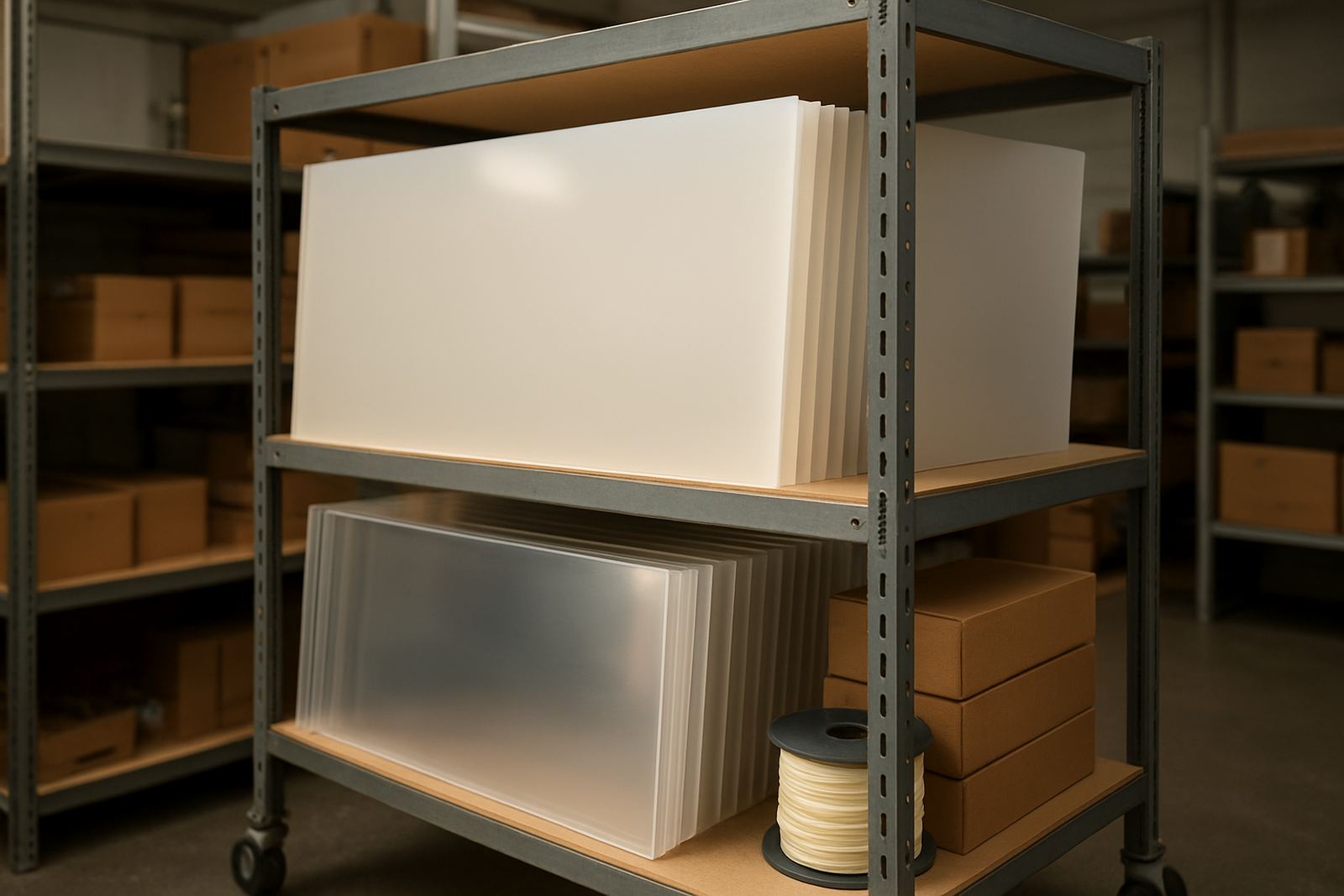
We supply food safe PETG sheet in a range of thicknesses for light to medium duty fabrication. Common sheet sizes are 2440 x 1220 mm, with cut to size work done in Epping for local collection or courier packing for out of town orders. Thinner sheets suit covers and internal panels, while thicker sheets are better for guards, trays and parts that take more handling.
- Thickness options: 1.5 mm, 2 mm, 3 mm, 5 mm and selected heavier gauges
- Cutting options: straight cuts, strip cutting, panel cutting and small batch cutting
- Finishing options: edge deburring, hole marking and film left on where needed
- Supply options: full sheet, custom pieces and job labelled packs
If you need repeat sizes for production, it helps to send a simple cutting list with finished dimensions and quantities. That saves time, and it reduces offcut waste on larger jobs.
Where food safe PETG suits best
This material suits environments where staff need clear sightlines and easy cleaning. It is commonly used in food preparation areas, bottling rooms, bakery workspaces, catering stores, hospitality fit-outs and light manufacturing where ingredients or finished goods pass through protected areas. It also works for custom covers on scales, mixers and enclosures where the operator still needs to see through the panel.
- Food handling guards and splash shields
- Trays and sliding covers
- Storage and display partitions
- Machine surrounds in hygienic areas
- Temporary inspection windows and access panels
For coastal sites around Cape Town, humidity and salt air can affect some fixtures and fixings, so it is wise to use suitable hardware and avoid trapped moisture at the mounting points. In dusty industrial zones, a smooth cut edge and proper sealing at the frame can help keep the panel cleaner for longer.
Fitting, fixing and site requirements
Food safe PETG sheet does not need special power or gas for installation. It can be fitted with standard workshop tools, including measuring gear, saws, drills and deburring tools. For smaller work, a clean bench and simple clamps are usually enough. On larger jobs, especially in factories or kitchens with fixed production times, plan the fitting around shutdown periods so the area can be cleared and cleaned properly.
When fastening the sheet, allow for thermal movement if the panel is exposed to heat, sunlight or steam. Do not over-tighten fixings, as this can cause stress around holes. If the panel forms part of a hygiene barrier or food zone screen, check the local operational rules and internal QA requirements before cutting. The wrong hole spacing or a tight frame can make servicing harder later on.
Cleaning, servicing and day to day care
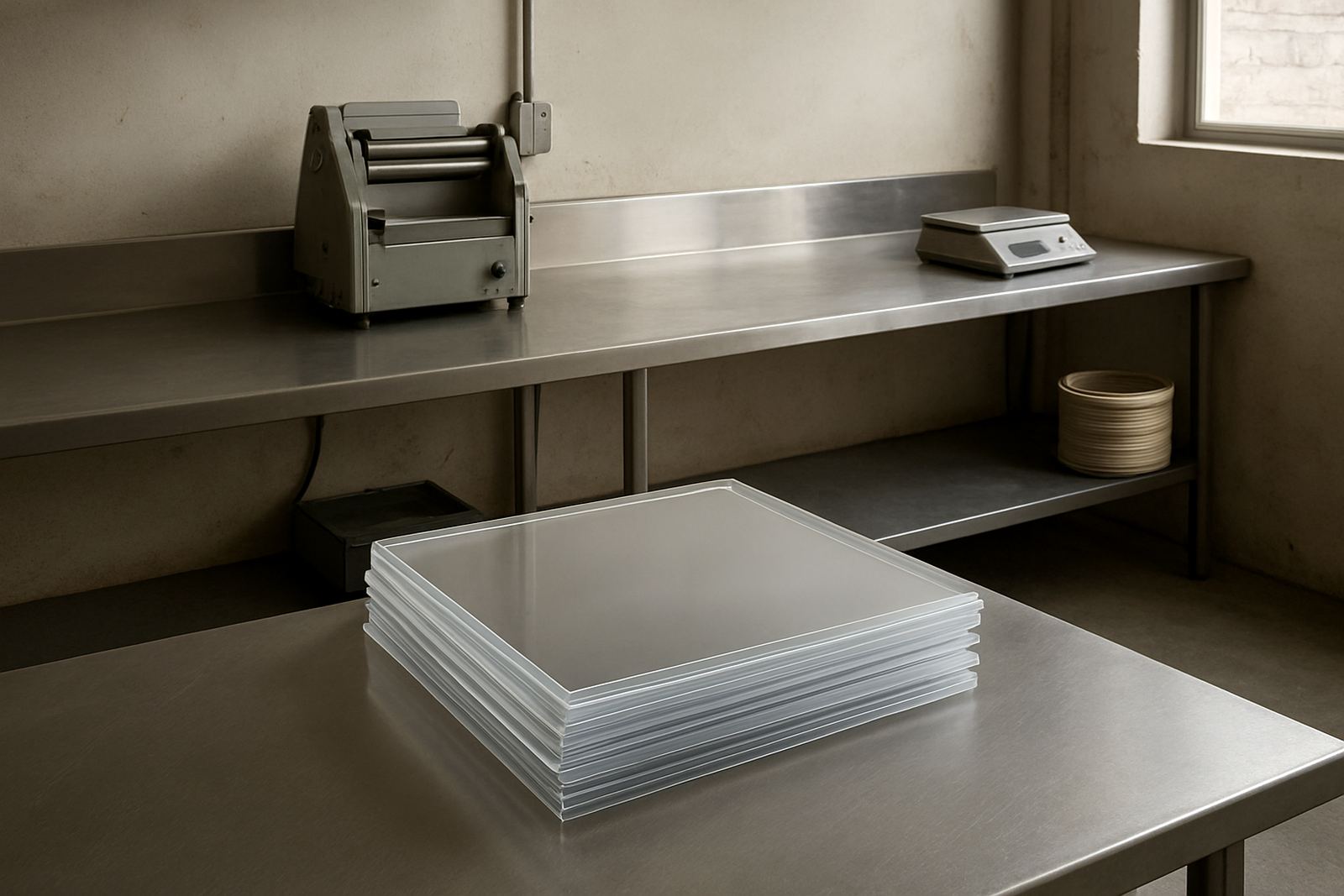
Food safe PETG is straightforward to maintain with mild soap and water, followed by a soft cloth. Avoid abrasive pads and harsh solvents that can mark the surface. In food environments, regular cleaning is important because grease, flour, sugar and detergent residue can build up quickly, especially near prep lines and packing tables. A simple cleaning routine keeps the panel clear and helps the material last longer.
For servicing, inspect the edges and mounting holes at routine intervals. If the sheet is used as a guard, check for cracks, clouding or loose fixings after cleaning cycles and during routine maintenance. Minor scratches can often be managed by replacing the panel before it affects visibility. If you need multiple panels for a production line, it is worth ordering a spare or two so a damaged section can be swapped out quickly.
What to check before you place an order
Send the finished size, thickness, quantity and application so we can advise on the right format. If the sheet must be clear, food contact suitable, or used close to heat sources, say so upfront. The more detail you give on cut-outs, corner radii, fixing holes and edge finish, the better the result. It also helps to mention whether the panels are for collection in Epping, or courier delivery to Cape Town, the Winelands or further afield.
- Finished dimensions in millimetres, not rough estimates
- Required thickness and whether the sheet will be supported fully or partly
- Number of holes, slots or cut-outs needed
- Whether film should stay on during transport and fitting
- Collection point or delivery address for packing
- Any cleaning, heat or hygiene limits on site
If you are unsure, our team can help with material advice before you place the order. That is often the easiest way to avoid rework, and it keeps lead times under control.
Key facts
| Material | Food safe PETG sheet, clear thermoplastic |
|---|---|
| Common thicknesses | 1.5 mm, 2 mm, 3 mm, 5 mm and selected heavier gauges |
| Standard sheet size | 2440 x 1220 mm, with custom cut sizes available |
| Cutting services | Straight cuts, strip cutting, panel cutting, small batch cutting, large batch cutting |
| Finishing options | Edge deburring, hole marking, film left on, job labelling |
| Supply area | Collection in Epping, Cape Town, with nationwide courier delivery |