
Why the 3kg spool suits longer runs
The 3kg option is built for people who print often and do not want to stop halfway through a job to change spools. It suits prototyping rooms, small production setups, sign shops and makers working on brackets, housings, jigs, fitment parts and display pieces. PETG offers a practical balance between ease of printing and tougher service life, so it is a sound choice when parts need to last longer than a quick demo print.
For Cape Town and the coast, PETG is often chosen because it copes better with humidity than some other filament types, and it is less brittle in day-to-day use. That helps when parts are handled, transported or fitted into service areas where a bit of flex is useful. It is not a material for every application, but it is a dependable middle ground for many workshops.
Sizes, spool format and print setup
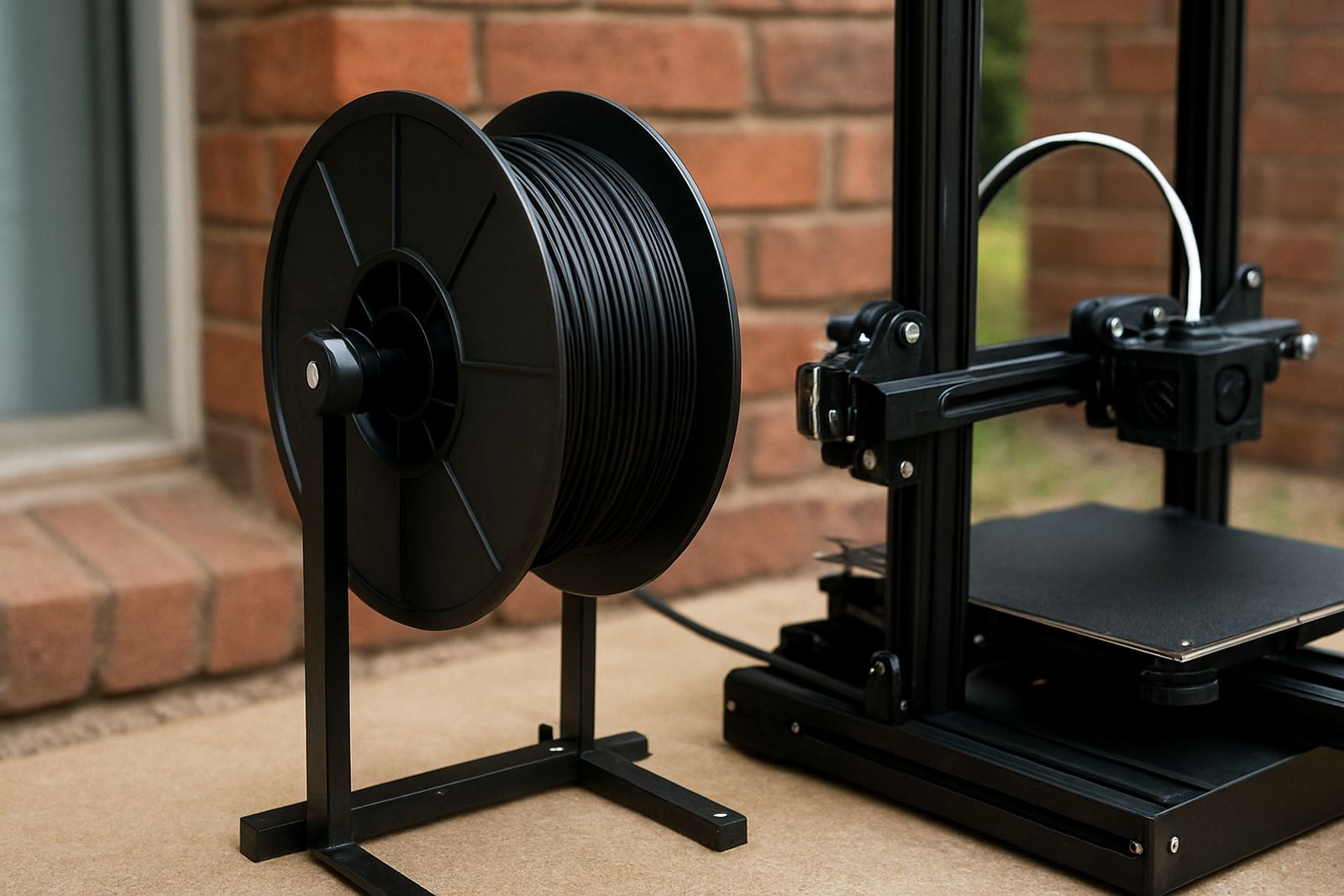
The 3kg spool is intended for printers that can handle a larger reel and a steadier feed path. Before ordering, check your spool holder width, gantry clearance and runout path so the filament feeds smoothly. If your printer sits in a cabinet or enclosure, make sure the spool can turn without scraping or snagging. A smooth feed matters more on long jobs than most people expect.
- Material: PETG filament
- Spool mass: 3kg
- Common diameter options: 1.75 mm
- Recommended nozzle range: 0.4 mm and up
- Typical print temperature: 230 to 250 degrees C
- Typical bed temperature: 70 to 85 degrees C
Use the printer profile that matches your machine and keep the first layers steady. PETG usually prints well with moderate cooling, but each printer differs. If you are running a production queue, test one short piece before sending a full batch, especially when changing colour or adjusting speeds.
Where 3kg PETG works best in South Africa
This spool size is useful where the same part is produced again and again, or where long unattended runs save time. It works well for manufacturing aids, machine guards, clips, covers, sample parts and functional prototypes. It is also a sensible option for design studios that need repeatable results across a group of jobs, not just one-off prints.
For users in industrial areas like Epping, Montague Gardens and Bellville, the larger spool can cut down on changeovers during a shift. That matters when load-shedding windows are short and you want to complete a run before the next interruption. In coastal areas, storage matters too, because PETG should be kept dry to avoid stringing and inconsistent extrusion.
- Good for long print runs and batch production
- Suitable for functional parts that need better toughness
- Useful in workshops, design studios and prototyping rooms
- Practical for coastal use when stored correctly
- Helpful where fewer spool changes save time and labour
Power, printer conditions and running costs
PETG filament itself does not need special power or gas, only a printer that can reach the right nozzle and bed temperatures. The main thing to plan for is electrical stability. If you print in an area affected by load-shedding, use proper backup power for the printer, heated bed and any enclosure fans you rely on. An unexpected cut can waste a long job, and a 3kg spool is usually chosen precisely because the run is worth protecting.
Keep the printer on a level surface and make sure the feed path is free of sharp bends. If you print in a warm room or near an open warehouse bay, watch for dust and moisture. Those small things can affect finish quality more than the material itself. A dry filament path and a clean nozzle will help you get the best from the spool.
Care, storage and servicing between jobs
Because the spool is larger, it is worth giving storage a bit more attention. Keep it sealed when not in use, especially in humid weather or near the coast. If the filament has been open for a while, use a dry box or desiccant storage before a critical run. That helps reduce popping, stringing and rough surfaces.
For ongoing service, check the first few layers of each new print and inspect the nozzle if you notice under-extrusion or a rough line. A clean nozzle and a stable feed path will do more for print quality than constant profile changes. If you are running several jobs back-to-back, label the spool with the job name and keep track of remaining length so you do not run short mid-shift.
What to check before you order
Before you place an order, confirm the filament diameter, printer compatibility and spool holder clearance. If you need a specific colour or a certain batch for repeat work, make sure that is noted on the enquiry. If you are matching an existing part, it is also worth checking whether the finish needs to be matte, glossy or simply functional. Small details like that can save time on reprints.
For local customers, collection options are available in Epping and selected areas around Cape Town, with courier delivery nationwide for filament orders. If you are unsure whether the 3kg spool will suit your machine, send through the printer model and the type of work you do. That makes it easier to advise on feed path, speed and storage, rather than guess and hope for the best.
- Confirm diameter and spool size before ordering
- Check printer clearance for a larger reel
- Ask about colour match or repeat batch supply if needed
- Plan for dry storage after opening
- Tell us your printer type and job size for practical advice
Key facts
| Product | 3kg PETG filament |
|---|---|
| Spool size | 3 kg |
| Common diameter | 1.75 mm |
| Print temperature | 230 to 250 degrees C |
| Bed temperature | 70 to 85 degrees C |
| Supply | Courier nationwide from Cape Town, with local collection options |